
Anúncios
Weather on the trail rarely stays put.
A frosty trailhead becomes a warm, sunny climb, then a windy ridge, then a shady descent as clouds roll in.
Dressing for all of that at once is impossible, which is why experienced hikers wear layers they can add and remove as conditions change.
Anúncios
Layering is simple once you understand what each piece is meant to do.
This guide explains the three core layers, the fabrics that work best,
and the habits that keep you comfortable from the first step to the last.
Why Layers Beat One Big Jacket
Your body produces a lot of heat when you climb and very little when you stop.
A single heavy coat is either too warm on the uphill or not warm enough at lunch.
Several thinner layers let you fine-tune your insulation minute by minute.
Layers also solve the biggest comfort problem in hiking, which is moisture.
Sweat soaking into your clothes robs you of warmth as soon as you slow down,
and that chill can turn serious in cold, wet or windy weather.
The goal of a good layering system is to stay warm enough and dry enough, from the inside and the outside.
The Three Core Layers
Most layering systems are built from three parts, each with its own job.
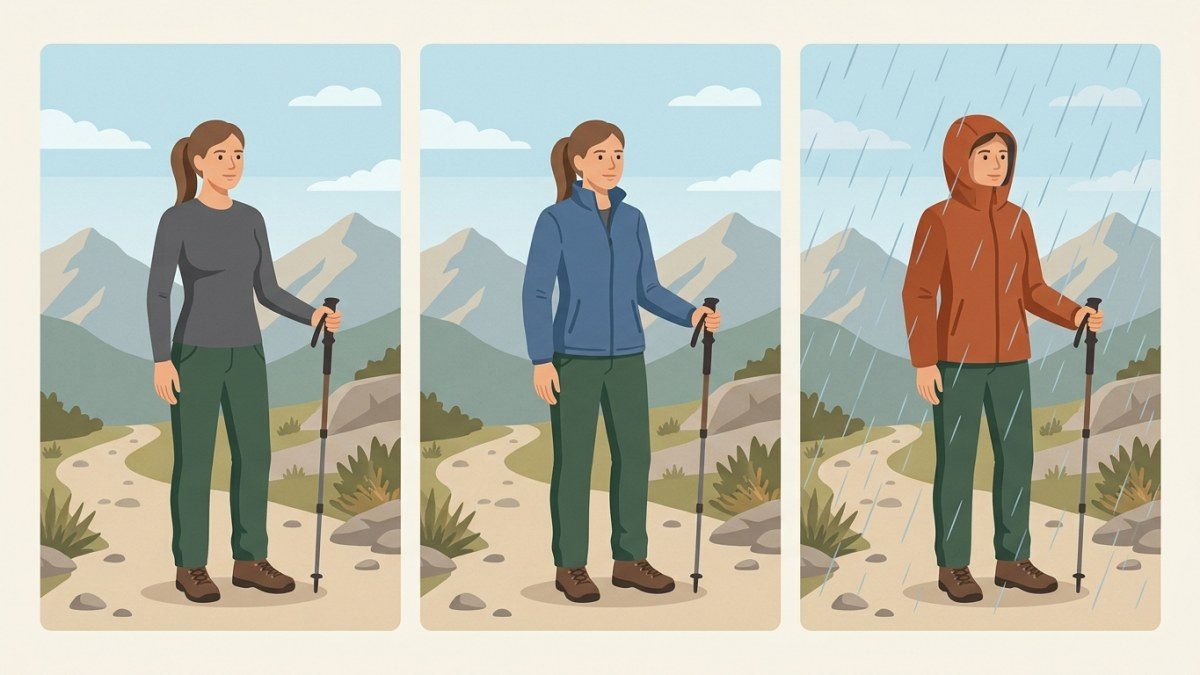
| Layer | Main job | Common materials |
|---|---|---|
| Base layer | Moves sweat away from your skin | Merino wool, polyester, nylon blends |
| Mid layer | Traps body heat | Fleece, down, synthetic insulation, heavier wool |
| Outer layer | Blocks wind, rain and snow | Waterproof-breathable shells, wind jackets |
Base Layer
The base layer sits against your skin.
It should fit close without squeezing, so it can pull moisture away and spread it out to dry.
In warm weather your base layer might be a light synthetic T-shirt, and in winter a long-sleeved top and leggings of heavier weight.
Mid Layer
The mid layer is your insulation.
A fleece jacket breathes well and keeps working when damp, which makes it a good choice while moving.
A puffy jacket filled with down or synthetic insulation is warmer for its weight and packs small,
which makes it ideal for rest stops and emergencies.
Outer Layer
The shell protects everything underneath.
A waterproof-breathable rain jacket with a hood is the most versatile option, and vents such as underarm zips let heat escape on climbs.
In dry, windy conditions, a light wind jacket breathes better and weighs even less.
Over time, the water-repellent finish on the outside of a shell wears off,
and the outer fabric starts to soak through, which makes the jacket feel clammy.
Washing and re-treating it according to its care instructions usually restores its performance.
Choosing the Right Fabrics
Material matters as much as the type of layer. Each option has strengths and weaknesses:
- Merino wool: Soft, stays warm when damp and resists odors, so you can wear it for several days. It is less durable than synthetics and dries more slowly.
- Synthetics: Polyester and nylon wick moisture, dry quickly and hold up well to abrasion. They tend to hold odors more than wool.
- Down: Offers exceptional warmth for its weight and compresses small, but it loses much of its insulating power when wet unless it has been treated to resist water.
- Synthetic insulation: A little heavier and bulkier than down for the same warmth, but it keeps insulating when damp, which is valuable in wet climates.
- Cotton: Comfortable around town, but it absorbs water, dries slowly and pulls heat from your body when wet. Avoid it for anything but short outings in warm, dry weather.
Start Cold and Adjust Early
The most useful layering habit sounds uncomfortable: start your hike feeling slightly cool.
Within ten minutes of walking, your body will warm up, and if you started bundled up, you will already be sweating.
Many hikers sum this up as "be bold, start cold."
After that, adjust before you overheat or get chilled, not after.
Pause to shed a layer when you first feel warm on a climb,
and pull one on the moment you stop for a break or reach a windy summit.
Small, frequent changes keep you far drier than waiting until you are soaked.
Use zippers as fine-tuning tools.
Opening the front zip of a jacket or its underarm vents dumps heat in seconds, often without the need to stop at all.
Keep your layers where you can reach them.
A mid layer at the top of your pack and a shell in an outside pocket make quick changes easy,
so you will actually make them.
Remember Your Head, Hands and Feet
Small accessories give you a lot of control for very little weight.
A warm hat and a pair of light gloves let you adjust your comfort without taking off your pack.
A sun hat and a neck gaiter protect you from sun and wind.
On cold days, carry a second, warmer pair of gloves or mittens, since hands chill quickly once they are damp.
Socks are a layer too.
Wool or synthetic hiking socks cushion your feet and manage moisture, and on long or wet hikes,
a dry spare pair can make a big difference to comfort and to your skin.
Layer Your Legs Too
Your legs generate a lot of heat as they work, so they usually need fewer layers than your upper body.
Quick-drying hiking pants or shorts handle most conditions, and convertible pants with zip-off legs give you both options in one garment.
In cold weather, add a base layer under your pants. When rain or snow is likely, carry waterproof rain pants,
ideally with side zips so you can pull them on over your boots without a long stop.
Rain pants also block wind on exposed ridges and keep you dry when you brush through wet vegetation.
Read the Weather as You Go
Conditions change with elevation, time of day and terrain, so layering is really about anticipating what comes next.
As a rough rule of thumb,
air temperature drops by about 3.5°F for every 1,000 feet you climb (around 6.5°C per 1,000 meters),
and exposed ridges add wind that makes it feel colder still.
Watch the sky as well.
Building clouds, a sudden cool breeze or a drop in temperature can signal an approaching storm.
Pull on your shell before the rain arrives, not after you are wet, and if thunderstorms are developing, head down from high, exposed ground.
Sample Layering Kits
Here is how the system might look in different conditions.
Adapt it to your local climate and the forecast for your trail.
- Warm summer day in the hills: A light synthetic shirt, shorts or light pants and a sun hat, plus a thin fleece and a rain jacket in your pack for a storm or a breezy viewpoint.
- Cool spring or fall day: A long-sleeved base layer, hiking pants, a light fleece, a rain shell, a warm hat and light gloves, plus a light puffy jacket for breaks.
- Cold winter day: Midweight base layer top and bottoms, a fleece or insulated mid layer, a waterproof shell jacket and pants, a warm hat, gloves and mittens, and a warm puffy jacket reserved for stops.
Putting It All Together
Good layering is less about owning the perfect jacket and more about using a few pieces well.
Wear a moisture-wicking base, carry insulation and a shell, choose wool or synthetics over cotton, start slightly cool, and adjust early and often.
Do that, and changing weather becomes just another part of the view.
Sources and Further Reading
This article was reviewed by the BraverPlay editorial team against the official sources below. Rules, conditions and gear vary from place to place, so always check the latest guidance from local authorities before you head out.
- What to Wear on a Winter Hike, Washington Trails Association: The base, insulating and outer layer system, starting cold to avoid sweating, wool versus synthetic fabrics, and avoiding cotton.
- Earth Atmosphere Model - Imperial Units, NASA Glenn Research Center: The standard atmosphere model, in which air temperature falls about 3.5 degrees F for every 1,000 feet of altitude.
- Lightning Safety Outdoors: When a Safe Building or Vehicle is Nearby, National Weather Service (NOAA): Avoiding hilltops and ridges when thunderstorms threaten, and planning mountain hikes early because storms often build in the afternoon.
- Backcountry safety - Jasper National Park, Parks Canada: Dressing in layers you adjust as you go, changing out of wet clothes before you get chilled, and choosing fabrics that insulate when wet instead of cotton.