
Anúncios
A life jacket is the simplest and most effective piece of paddling safety gear you'll ever own.
It keeps your head above water when you're exhausted, injured, cold or stunned by a sudden plunge,
and it buys you time for help to arrive.
Anúncios
But it can only do that if it's approved, fits properly and is actually on your body.
Here's how paddling life jackets differ, what to look for when you choose one,
how to fit it correctly and how to care for it so it's ready every time you launch.
Why You Wear It Every Time
Capsizes happen suddenly, often in conditions that seemed perfectly safe a moment earlier.
Once you're in the water, putting on a life jacket that was stowed behind your seat is extremely difficult,
especially if the water is cold or rough.
A jacket tucked under the deck bungees can also float away the moment you tip.
Cold water adds another risk. Sudden immersion can trigger cold-water shock,
an involuntary gasp followed by rapid breathing that makes it hard to hold your breath or swim,
even for strong swimmers.
A life jacket keeps your airway clear while you get your breathing under control, and it keeps you afloat if you're hurt or dazed.
That's why the habit that matters most is simple: wear it, buckled, whenever you're on the water.
Treat it like a seat belt, not like a spare tire.
Life Jacket, PFD or Buoyancy Aid?
You'll hear several names for the same basic idea.
In North America, "PFD," short for personal flotation device, is the umbrella term, and paddling PFDs are usually vest-style.
In some places, "life jacket" refers specifically to a more buoyant design meant to turn a person face-up,
while in the United Kingdom, paddling vests are commonly called buoyancy aids.
The name matters less than the approval. Choose a device approved by your country's authority, such as the U.S. Coast Guard in the United States, and read its label.
The label tells you the size or weight range it's designed for, the activities it's approved for and any conditions of use.
Foam or Inflatable?
Most paddlers wear foam life jackets,
which float you without any action on your part. They work even if you're knocked unconscious,
need little maintenance beyond inspection and add a bit of warmth and padding.
They're the standard choice for kayaking, canoeing and any moving water.
Inflatable life jackets are slim and cool to wear because they only provide flotation once inflated,
either automatically when submerged or manually when you pull a cord. They come with trade-offs:
- A manual model does nothing if you can't pull the cord.
- They must be inspected regularly, and the gas cylinder must be replaced after each inflation.
- Many carry age, weight or activity restrictions on the label.
- They're generally not suited to whitewater, weak swimmers or activities where you expect to end up in the water often.
Features That Matter for Paddlers
Paddling life jackets are cut differently from general boating vests, and the design details affect whether you'll want to keep wearing one all day.
- Freedom of movement: Large armholes and a shorter torso let you rotate and reach without chafing.
- Seat compatibility: A thin or high-cut back panel won't push you forward against a tall kayak seat back.
- Adjustability: Side, shoulder and waist straps let you snug the fit over different layers of clothing.
- Pockets and attachment points: Useful for a whistle, snacks, sunscreen and a small light.
- Visibility: Bright colors and reflective trim help others spot you in the water.
- Fit options: Many models come in cuts shaped for different body types, including women's designs with contoured foam.
Specialized rescue vests with built-in harnesses exist for whitewater, but those features are designed to be used only after swiftwater rescue training.
How to Fit a Life Jacket
Fit matters as much as approval.
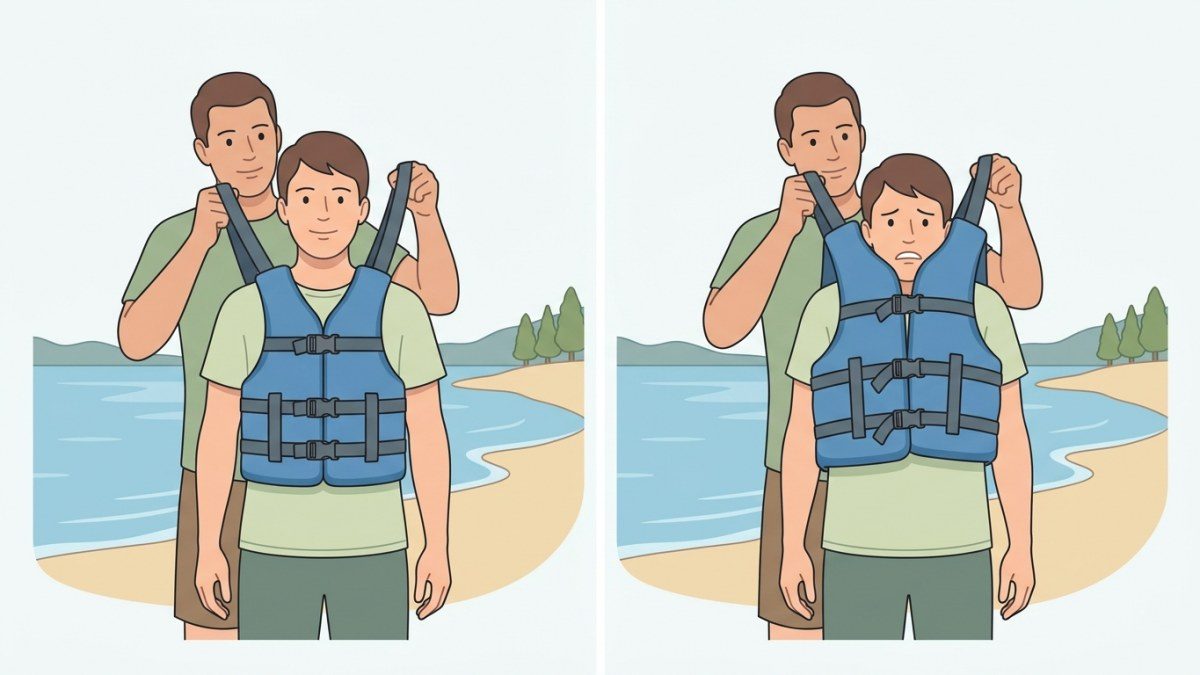
A jacket that's too loose can ride up over your face in the water, and one that's uncomfortable won't get worn.
Try it on with the clothing you'll paddle in, then work through these steps:
- Check the label to confirm the device is approved and matches your size or weight.
- Loosen every strap, put the jacket on and close the zipper or buckles.
- Tighten the straps from the bottom up: waist first, then the sides, then the shoulders.
- Have a friend grab the shoulder straps and pull upward. The jacket shouldn't slide up past your chin or ears. If it does, tighten it further or try a smaller size.
- Sit in your boat and mimic paddling to make sure you can move freely and that it works with your seat.
- Test it in calm, shallow water under supervision. Lean back and relax; you should float comfortably with your chin above the water.
Fitting Children
Children need life jackets sized for their weight, not ones they'll grow into.
A loose jacket can slip over a child's head in the water, which defeats its purpose.
Many children's designs include a strap between the legs to keep the jacket from riding up,
and those for small children often add a head support and a grab handle.
Do the same pull test at the shoulders, and let kids practice floating in their life jackets in calm,
shallow water with an adult right beside them.
They'll be calmer if they ever fall in for real, and they'll follow your lead if you always wear yours.
Care and Inspection
Check your life jacket before every season and after any hard use.
Replace it if you find rips or tears, broken buckles or zippers, straps that won't hold,
or foam that has become hard, shrunken or waterlogged. Never alter a life jacket,
since modifications can affect how it performs.
After paddling, rinse it with fresh water, especially after salt water,
and let it air-dry out of direct sunlight before storing it somewhere cool and ventilated. Don't use it as a seat cushion or kneeling pad,
which compresses the foam over time. For inflatable models, follow the manufacturer's schedule for checking the cylinder and inflation mechanism.
Frequently Asked Questions
Do strong swimmers need to wear one?
Yes. Swimming ability doesn't protect you from cold-water shock, a blow to the head or exhaustion in rough water.
Rules about carrying or wearing a life jacket vary by location, so check what applies where you paddle,
but the safest choice is always to wear it.
How long does a life jacket last?
Most foam life jackets don't carry a fixed expiration date.
Their lifespan depends on use, sun exposure and storage, so inspect them regularly and replace them when they show wear,
damage or foam that no longer feels springy.
Can I use a general boating life jacket for paddling?
An approved device is far better than none, but general boating vests are often bulky around the shoulders and back.
A paddling-specific design is more comfortable when you're moving your arms all day, which makes you far more likely to keep it on.
The Best Life Jacket Is the One You Wear
Choose an approved life jacket designed for paddling, fit it snugly, test it in the water and take care of it between trips.
Then make wearing it as automatic as buckling a seat belt.
It won't prevent every accident, but it gives you the flotation and the time to get through one.
Sources and Further Reading
This article was reviewed by the BraverPlay editorial team against the official sources below. Rules, conditions and gear vary from place to place, so always check the latest guidance from local authorities before you head out.
- Life Jacket Wear / Wearing Your Life Jacket, U.S. Coast Guard Boating Safety: Choosing a USCG-approved life jacket, a snug fit that won't ride above the chin or ears, inflatable limits and yearly checks.
- Choosing Lifejackets and Personal Flotation Devices (PFDs), Transport Canada: Lifejackets vs PFDs, inflatables barred under age 16 or 80 lbs, children's collar and crotch strap, and bright colors.
- Always Wear Your PFD, National Center for Cold Water Safety: Putting a PFD on after you're in the water is very difficult or impossible, and cold shock makes swimming without one deadly.
- All About Life Jackets, Oregon State Marine Board: The pull test at the shoulders, no life jackets for kids to grow into, and replacing inflatable cylinders after use.