
Anúncios
A hammock turns any pair of healthy trees into a bed. There is no hunting for flat ground,
no rocks under your hip and nothing to sweep out in the morning.
Rocky, sloping or root-covered forest that would be miserable for a tent can be perfect for a hammock.
Anúncios
A comfortable night does depend on getting a few details right, though. The angle of the hang,
the way you lie and how you insulate the underside make the difference between restful sleep and a stiff,
chilly night. Master those, sidestep the classic beginner mistakes, and you may not want to go back to the ground.
What You Need for Hammock Camping
A backyard hammock and a camping setup are very different things. For an overnight, you will want:
- A camping hammock long enough for your height, with a weight rating well above your body weight plus anything you keep in it.
- Tree-friendly straps: wide, flat webbing that spreads the load and protects bark, rather than thin rope or cord.
- A bug net whenever insects are active, either built in or separate.
- A tarp large enough to cover the whole hammock with some overhang at each end, plus guy lines and stakes.
- Bottom insulation: an underquilt that hangs beneath the hammock or an insulated sleeping pad inside it.
- Top insulation: a sleeping bag or a top quilt.
Choose Trees and a Safe Spot
Look for two healthy, living trees that are sturdy and thick,
often cited as at least 6 inches (about 15 centimeters) in diameter,
and roughly 12 to 15 feet apart for most camping hammocks.
Avoid dead trees, trees that lean or show signs of rot and anything with dead limbs overhead.
Look up carefully before you commit, because a falling branch is the most serious hazard in hammock camping.
Check the local rules before you hang.
Some parks and campgrounds limit or prohibit attaching anything to trees or structures, and others require wide straps.
Never hang from fences, railings, shelters or other structures not designed for the load, and avoid hanging over water, rocks or steep drop-offs.
Get the Hang Right
The most important setup detail is the angle of the suspension.
Aim for your straps to meet the hammock at roughly 30 degrees from horizontal.
A hammock pulled tight like a bridge feels cramped, squeezes your shoulders and multiplies the force on the straps and trees.
A generous sag is what lets you lie flat.
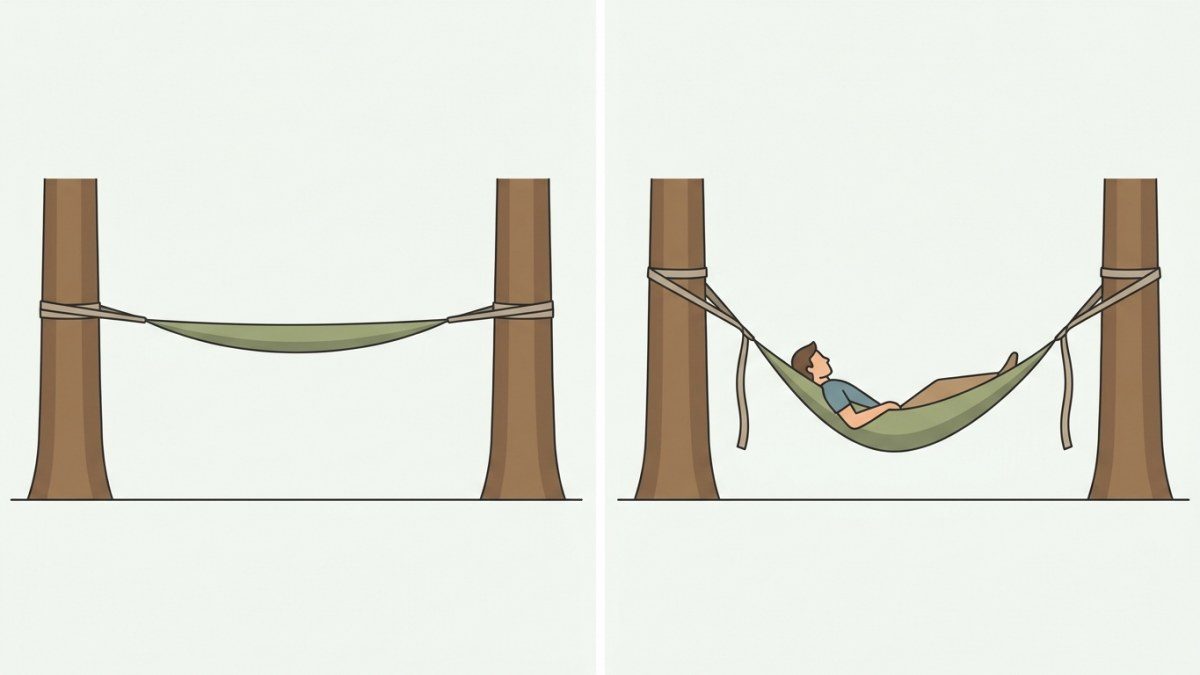
Hang the hammock so that when you sit in it, the seat is about chair height,
low enough to sit down comfortably with your feet on the ground.
Test it by sitting gently in the middle before lying down, and check that the straps are secure and not sliding down the trunks.
A structural ridgeline, a cord connecting the two ends of the hammock,
sets the same sag every time no matter how far apart the trees are.
Many hammock campers set it at roughly 80 to 85 percent of the hammock's length.
A Step-by-Step Setup Routine
Doing things in the same order every time makes setup fast, even in fading light:
- Check the trees and the canopy above them for dead wood.
- Wrap the straps around each trunk. With typical tree spacing, roughly head height is a good starting point for a 30-degree hang.
- Clip in the hammock and adjust until it has a deep, even sag.
- Sit-test it close to the ground before trusting it with your full weight lying down.
- Rig the tarp on its own line above the hammock, then stake out the edges.
- Add drip lines and hang the underquilt, adjusting it so it hugs the hammock without being squashed.
- Organize your gear by hanging small items from the ridgeline and keeping your pack and shoes off the ground under the tarp, inside a pack cover or a spare bag.
How to Lie Comfortably
Do not lie straight down the center of the hammock like a banana.
Instead, lie diagonally, with your head a little to one side of center and your feet toward the other.
In a well-sagged hammock, this flattens the fabric under you, keeps your back straighter and lets you sleep on your back or even your side.
Many people also hang the foot end a few inches higher than the head end,
so they do not slide toward the middle during the night.
A small pillow or rolled jacket under the knees can relieve pressure behind them.
Staying Warm and Dry
Hammock campers often discover that air moving beneath them chills them even on mild nights.
Your sleeping bag's insulation is crushed flat under your weight, so it does little to block that cold.
The fix is bottom insulation: an underquilt that hangs outside the hammock without being compressed, or a sleeping pad placed inside it.
Pads can slide around, so hammocks with a double layer or pad sleeve help hold them in place.
For rain, pitch the tarp above the hammock on its own ridgeline, with the edges angled down.
In calm weather, pitch it high for airflow and views; in wind or driving rain, lower it and stake it close.
Tie drip lines, short pieces of cord,
to your straps just inside the tarp's edge so rainwater running along the straps drips off before it reaches the hammock.
Common Mistakes to Avoid
- Hanging the hammock too tight, which causes shoulder squeeze and puts heavy loads on the trees
- Hanging too high, which makes getting in awkward and a fall more serious
- Choosing dead trees or ignoring branches overhead
- Using thin rope or cord that damages bark
- Skipping bottom insulation on nights that feel mild at dusk
- Lying straight down the middle instead of on the diagonal
- Forgetting drip lines and waking up with a wet hammock
- Trying a new setup for the first time on a trip instead of practicing at home or in a park
Frequently Asked Questions
Is sleeping in a hammock bad for your back?
Many people find a properly hung hammock comfortable, particularly when they lie on the diagonal with a good sag.
Comfort is personal, though.
If you have back problems, try a few nights close to home first and talk to a medical professional if you have concerns.
Can you go hammock camping in cold weather?
Yes, but it requires serious bottom insulation, a warm top quilt or bag and a tarp that blocks the wind.
Cold-weather hammock camping takes experience, so build up gradually from mild nights.
Can two people share one camping hammock?
Most camping hammocks are designed for one sleeper.
Couples usually hang two hammocks side by side, sometimes sharing an anchor tree, and cover both with a larger tarp.
Ready to Hang
Hammock camping rewards a little practice.
Pick healthy trees, use wide straps, aim for a 30-degree hang, lie on the diagonal and insulate underneath.
Set it up a few times close to home, adjust until it feels right,
and you may find it is the most comfortable way you have ever slept outdoors.
Sources and Further Reading
This article was reviewed by the BraverPlay editorial team against the official sources below. Rules, conditions and gear vary from place to place, so always check the latest guidance from local authorities before you head out.
- Finding and Setting Up a Campsite, U.S. National Park Service: Look up before you camp and never set up under dead branches or near dead trees that might fall.
- Hammocking and Slacklining, Wisconsin Department of Natural Resources: Hang only from healthy live trees using flat webbing at least 1 inch wide, never rope, and keep the hammock low to the ground.
- Hug a Tree, Don't Hurt a Tree - Rock Creek Park, U.S. National Park Service: Ropes and cords cut into bark and harm trees, and some parks ban attaching hammocks to trees at all.
- What to Bring (Camping), U.S. National Park Service: Many parks do not allow ropes tied to trees, so check park regulations before bringing a hammock.