
Anúncios
A good camping stove makes the difference between a hot breakfast in five minutes and a cold granola bar in the drizzle.
Unlike a campfire, a stove often still works when fire restrictions are in place,
when the wood is wet and when you are above the tree line,
Anúncios
and it gives you real control over the heat.
Stoves also involve pressurized fuel and open flames, so choosing the right type and using it correctly matter equally.
Knowing how the main types compare, how weather and altitude affect them and which safety habits matter most will help you cook with confidence.
Match the Stove to Your Trip
Start with how you camp and what you cook.
A family at a drive-in campground wants a stable stove with two burners and fine flame control for pancakes and stir-fries.
A backpacker who mostly boils water for dehydrated meals wants something light and compact.
Winter campers and travelers in remote regions need a stove that performs in freezing temperatures and runs on fuel they can actually find.
Group size matters too.
A tiny single-burner stove is perfect for one or two people but becomes a bottleneck when cooking for six.
Think about your largest usual group and the kind of meals you enjoy making.
If you mostly car camp but backpack now and then, a small backpacking stove can also serve as a handy extra burner at the campground.
The Main Types of Camping Stoves
| Type | Best For | Strengths | Drawbacks |
|---|---|---|---|
| Two-burner propane | Car camping, groups | Stable, easy to use, good simmer control | Heavy and bulky |
| Canister | Backpacking, quick meals | Light, compact, lights instantly | Weaker in cold; canisters can be hard to find in remote areas |
| Liquid fuel | Cold weather, remote travel, big groups | Reliable in cold, refillable fuel bottle | Heavier, needs priming and maintenance |
| Alcohol | Ultralight solo trips | Very light, simple, quiet | Slow, flame hard to see, limited control |
| Wood-burning | Places where fires are allowed | No fuel to carry | Often banned during fire restrictions, sooty, needs dry fuel |
Canister stoves come in several designs. Upright models screw directly onto the canister and are the smallest and lightest.
Integrated systems pair the burner with a matching pot and heat exchanger for fast, efficient boiling in wind,
though many are better at boiling than simmering.
Remote canister stoves connect to the canister with a hose, sit lower and more stably,
and some can run with the canister turned upside down for better cold performance,
but only if the stove is designed for it.
Features Worth Comparing
- Simmer control: essential if you cook real meals rather than just boiling water.
- Stability: wide pot supports and a low center of gravity reduce the chance of tipping a pot of boiling water.
- Wind performance: a recessed burner or built-in wind protection saves fuel and time.
- Igniter: push-button igniters are convenient but can fail, so always carry a lighter as well.
- Fuel availability: make sure you can buy the right fuel where you are going, especially when traveling.
- Weight and packed size: critical for backpacking, far less important for car camping.
Treat advertised boil times as best-case numbers from calm, mild conditions. Wind, cold and altitude all slow a stove down.
How Cold and Altitude Change Things
Canister stoves rely on the fuel vaporizing inside the canister, and that pressure drops as temperatures fall.
Near freezing, a canister stove can sputter and weaken, and it slows further as the canister empties and cools.
Keep the canister warm in a jacket or sleeping bag before cooking, and choose fuel blends made for colder conditions.
For regular use in below-freezing temperatures, liquid-fuel stoves are more dependable.
At high elevations, water boils at a lower temperature, so foods that need simmering, like pasta or rice, take longer to cook.
Plan on a little more fuel for mountain trips.
Planning How Much Fuel to Bring
Fuel use varies widely with the stove, the weather, the altitude and what you cook, so your own records are the best guide.
Note how much fuel you use per meal over a few trips, and you will soon pack the right amount every time.
A kitchen scale makes this easy.
Weigh a canister before and after a trip, or compare it with the empty weight when the manufacturer lists one,
to see how much fuel remains. Add a margin for cold, wind, melting snow or an unexpected extra night.
Using a lid, keeping the stove out of the wind and simmering gently instead of boiling hard all stretch your fuel further.
Safety Rules for Every Stove
Most stove accidents are preventable. Make these habits automatic:
- Cook outside in the open air. Never use a stove inside a tent, camper or vehicle. Burning fuel produces carbon monoxide, which is invisible, odorless and can be deadly, and tent fabric catches fire fast.
- Use a stable, level surface clear of dry grass, leaves, tent fabric and tarps.
- Check connections before lighting. If you smell gas or hear hissing, close the valve and move away from any flame until the leak is found.
- Do not overheat canisters. Avoid oversized pots that reflect heat downward and windscreens that fully surround a canister stove, and never leave canisters in direct sun or a hot vehicle.
- Change fuel only when the stove is cool and well away from open flames, including other stoves and campfires.
- Never leave a lit stove unattended, and keep children and pets well back from the cooking area.
- Turn pot handles inward so nobody catches them while walking past.
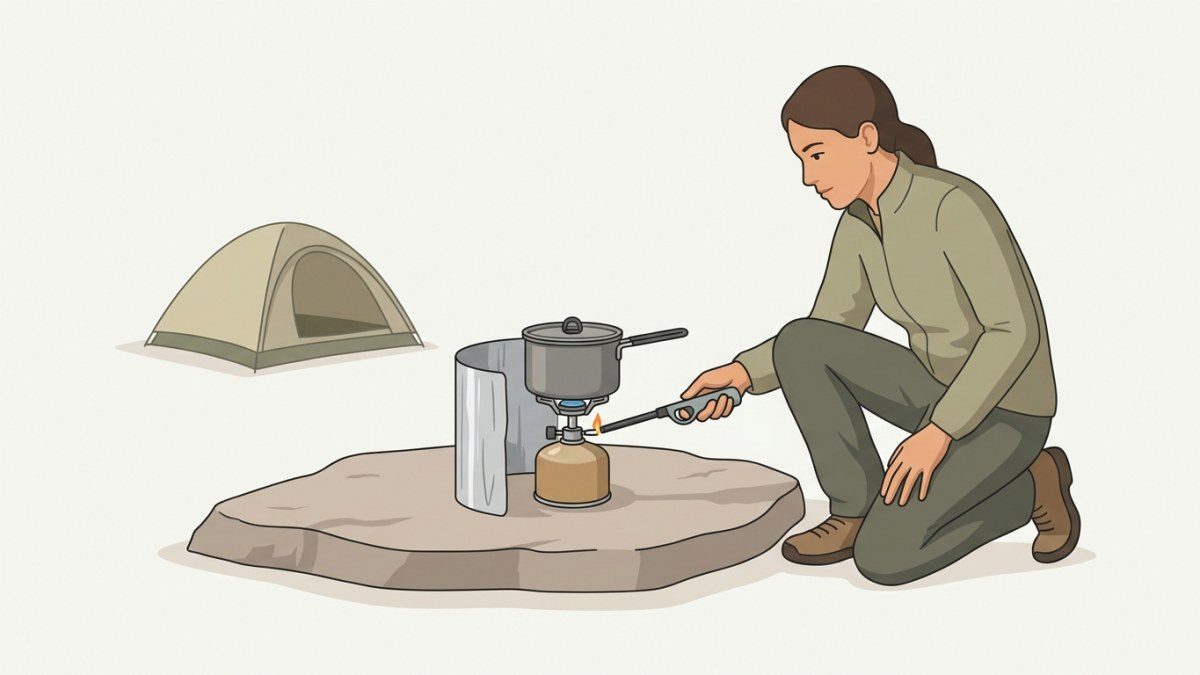
Also check current fire restrictions.
Many areas still allow stoves with an on-off valve during campfire bans, but stricter restrictions can limit those too.
Lighting and Troubleshooting
Always follow the manufacturer's instructions for your stove.
With most canister stoves, you open the valve just slightly and ignite right away, then adjust the flame;
never let gas flow for long before lighting.
Liquid-fuel stoves usually need to be pressurized with a pump and primed, which means burning a small amount of fuel to preheat the burner.
Expect some flare-up during priming, so keep your face and hands clear.
A weak flame on a canister stove often means a cold or nearly empty canister.
A yellow, sooty or sputtering flame on a stove that normally burns blue can signal incomplete preheating on a liquid-fuel stove or a dirty jet.
Turn the stove off, let it cool and clean or service it as the instructions describe.
Care, Storage and Fuel Handling
After each trip, let the stove cool, remove the canister or fuel bottle, wipe away food spills and check seals and O-rings for cracks.
Store fuel in a cool, well-ventilated place away from heat sources and living spaces.
Camping fuel is generally not allowed in airline luggage, so plan to buy it at your destination if you fly.
Dispose of or recycle empty canisters only as your local program directs.
Cook Safe, Eat Well
The best camping stove is the one that fits your trips: a sturdy two-burner for campground cooking,
a compact canister stove for most backpacking and a liquid-fuel stove for deep cold.
Whatever you choose, cook in the open air, keep fuel away from heat and flames, and a good stove will serve you reliably for years.
Sources and Further Reading
This article was reviewed by the BraverPlay editorial team against the official sources below. Rules, conditions and gear vary from place to place, so always check the latest guidance from local authorities before you head out.
- Portable Heaters & Camping Equipment (Carbon Monoxide), U.S. Consumer Product Safety Commission (CPSC): People die from carbon monoxide when camp stoves, heaters or lanterns are used inside tents, campers and vehicles.
- Carbon Monoxide Poisoning Basics, U.S. Centers for Disease Control and Prevention (CDC): Carbon monoxide is odorless and colorless, and a portable gas camp stove should never be used indoors.
- Stoves (Learn-to Camp), Parks Canada: Know which fuel your stove needs and bring extra, store fuel away from campfires, use a windscreen and test the stove at home.
- Fire Restrictions - Sequoia & Kings Canyon National Parks, U.S. National Park Service: During fire restrictions, wood fires and wood-burning stoves can be banned while gas, propane and alcohol stoves stay permitted.