
Anúncios
Water finds its way into everything on a paddling trip.
Splashes drip off your paddle, rain soaks in, waves wash over the deck and, now and then, the whole boat ends up upside down.
Without good waterproof packing, the spare fleece you were counting on is soaked exactly when you need it most.
Anúncios
Dry bags are simple, but using them well takes a little know-how.
Here's how they work, how to seal them properly, which types suit which jobs and how to pack a kayak,
canoe or paddleboard so your essentials stay dry.
How a Roll-Top Dry Bag Works
The classic dry bag is a sack of waterproof fabric with a stiffened strip across the opening.
Instead of a zipper, it seals by rolling: you fold the top over on itself several times,
and the tight layers of fabric block water from getting in. A buckle holds the roll closed.
It's worth knowing the difference between splash-proof, waterproof and submersible.
Most roll-top bags handle rain, spray and a brief dunk in a capsize, but they aren't designed to stay underwater for long.
Some specialized bags and hard cases are built for submersion, and their product information will say so.
When in doubt, double-bag anything critical.
How to Seal a Dry Bag Properly
- Pack the bag, leaving several inches of empty space at the top for rolling.
- Press out excess air by squeezing the bag gently.
- Line up the stiffened edges and flatten them together so there are no wrinkles or gaps.
- Roll the top down tightly at least three times.
- Clip the buckle and, if the bag rides on deck or in a canoe, clip it to the boat.
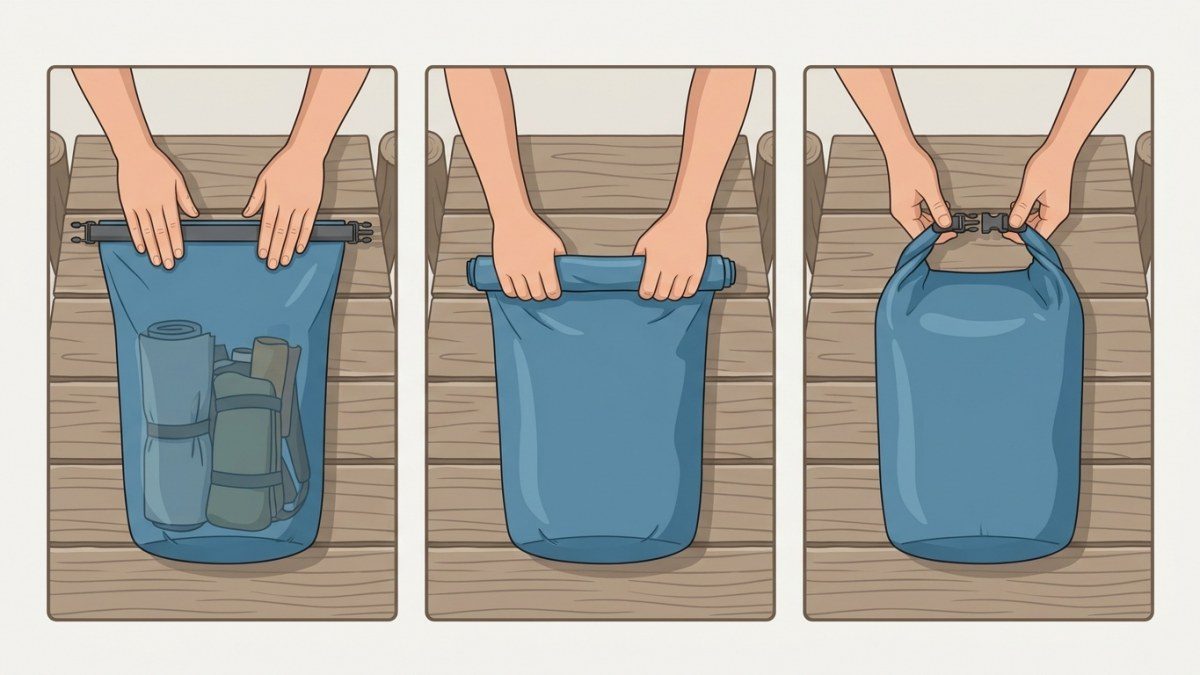
Test new bags at home before your trip.
Put a dry paper towel inside, seal the bag and hold it underwater in a tub for a short while.
If the paper comes out damp, check your rolling technique and the seams.
Types and Sizes
Dry bags are usually sized by volume in liters.
Rather than one giant bag, most paddlers use several smaller ones, which fit through hatches more easily,
spread the weight and keep gear organized. Using a different color for each kind of contents saves a lot of rummaging.
- Small bags: Keys, snacks, sunscreen and a small first aid kit
- Medium bags: A spare set of clothes, a rain jacket and lunch
- Large bags: Sleeping bags, tents and camp clothing on overnight trips
- Compression dry sacks: Bags with a purge valve that let you squeeze bulky items smaller
- Dry backpacks: Handy for canoe trips with portages or long walks from the parking lot
- Deck bags: Small bags that strap to a kayak deck for quick access
- Hard cases and barrels: Crush-resistant protection for cameras, electronics and food
Fabric weight matters too. Heavier, tougher bags stand up to being dragged over rocks and tossed onto portage trails,
while lighter bags pack smaller and slide more easily into tight kayak hatches.
What Needs to Stay Dry
Prioritize the things that keep you safe and warm: spare insulating layers, a first aid kit, your phone or radio,
food and, on overnight trips, your sleeping bag.
Wet insulation can turn a chilly evening into a serious problem, so these items deserve your best bags, sealed carefully and sometimes doubled.
Some things don't need protection at all.
Water bottles, bilge pumps, paddle floats and anything meant to get wet can ride loose, as long as they're secured to the boat.
Many paddlers also keep a small essentials bag within easy reach in the cockpit or on deck, clipped so it can't float away.
Stock it with a phone, a snack, sunscreen, a warm hat,
a small first aid kit and a way to start a fire where fires are allowed. If you ever have to land somewhere unexpected,
the most important items come ashore with you.
Packing a Kayak, Canoe or Paddleboard
Kayaks: Hatches and bulkheads keep out most water, but they're rarely completely waterproof, so everything inside should still go in dry bags.
Place heavy items low and close to the cockpit,
balance the weight side to side and keep things you'll need during the day in a deck bag or small hatch within reach.
Avoid piling loose gear on the deck, where it catches wind and gets in the way during a rescue.
On overnight kayak trips, think about the order you'll unpack.
Load the items you'll need first at camp, such as your tent and warm layers,
where you can reach them easily, and bury things you won't need until later deeper in the hatches.
Canoes: Use fewer, larger bags or packs,
keep them low and centered and clip them to thwarts or seats so they stay with the canoe if you capsize.
Keep a small bag of essentials within reach of each paddler.
Paddleboards: Carry only what you need in a small dry bag strapped under the deck bungees.
Keep the weight near the center of the board so it stays balanced and doesn't dig in at the nose.
Protecting Phones and Electronics
Phones, cameras and radios deserve two layers of protection.
A waterproof phone pouch lets you use the screen and call for help without opening anything,
while a hard waterproof case or a second dry bag adds a safety margin for cameras and spare batteries.
Tether anything you handle on the water so a fumble doesn't become a loss.
Condensation can creep in even when water doesn't.
Pack electronics when they're dry and at air temperature, and tuck a small moisture-absorbing packet into the case on longer trips.
Keep spare batteries and charging gear in their own sealed bag, so one leak can't ruin everything at once.
Care and Maintenance
Rinse bags with fresh water after salt water or sandy trips, since grit in the roll-top can break the seal.
Dry them inside and out before storing them unrolled in a cool, dark place.
Check older bags for pinholes and worn seams by holding them up to a bright light,
and patch small holes with a repair kit made for the fabric.
Replace bags that have cracked coatings, peeling seams or stiff, brittle roll-tops.
A dry bag that no longer keeps water out is worse than none at all, because it gives you false confidence about the gear inside.
Frequently Asked Questions
Should I squeeze all the air out?
For bags going into kayak hatches, yes, since less air means a more compact bag that slides in easily.
In a canoe or on deck, leaving a little air adds buoyancy, so a bag that goes overboard floats and is easier to recover.
Can I use a trash bag instead?
A heavy-duty plastic liner inside a pack or dry bag adds a useful second layer.
On its own, though, a thin plastic bag tears easily and won't survive a real soaking.
Why is my gear damp inside a sealed bag?
Usually it was packed damp, or condensation formed as temperatures changed. Pack gear dry,
open bags to air them out at camp and use a thin inner stuff sack for extra protection.
Stay Dry Out There
Good waterproof packing is mostly about habits: seal every bag the right way,
use several small bags instead of one big one,
protect your warm layers and electronics best and never trust a hatch alone.
Get those right, and you'll always have something dry to change into at the end of the day.
Sources and Further Reading
This article was reviewed by the BraverPlay editorial team against the official sources below. Rules, conditions and gear vary from place to place, so always check the latest guidance from local authorities before you head out.
- Paddling Safety: Kejimkujik National Park, Parks Canada: Carry a communication device such as a phone or GPS in a dry bag, plus clothing for changing conditions.
- Hypothermia, NHS: Wet clothes and cold water can lead to hypothermia, which is why spare insulating layers must stay dry.
- Cold Water Hazards and Safety, National Weather Service (NOAA): Carry a way to call for help, such as a VHF radio or personal locator beacon, and dress for the water temperature.