
Anúncios
An overnight canoe trip is one of the most rewarding ways to experience the outdoors.
A canoe carries far more than a backpack, so you can bring real food,
a comfortable camp and a good book, and still reach quiet shores and campsites that only paddlers see.
Anúncios
A first trip takes more planning than a day paddle, though.
Here's how to choose a route, pack and load the canoe, handle portages, pick a campsite and stay safe when the weather turns.
Choose a Beginner-Friendly Route
For a first trip, keep things modest.
Look for a route with calm, sheltered water, designated campsites and short portages or none at all.
A lake or slow river you've already day-paddled is ideal, because you'll know the launch, the landmarks and how long crossings take.
Plan a daily distance well within what your group can comfortably paddle on a day trip,
since a loaded canoe moves more slowly and camp chores eat into the day.
Build in extra time, or even a spare day, in case wind keeps you on shore.
A loop or an out-and-back route also saves you from arranging a vehicle shuttle at the end.
Many parks and wilderness areas require permits or campsite reservations and have rules about campfires, group size and where you can camp.
Check the managing agency's requirements well in advance, and get a good map showing campsites, portages and hazards.
Gear Beyond Your Day Kit
On top of your usual paddling gear, including a life jacket for everyone approved by your country's authority, such as the U.S. Coast Guard in the United States, you'll need:
- A tent, sleeping bags and sleeping pads suited to the season
- A stove, fuel, cookware and utensils
- A way to treat water: a filter, chemical treatment or boiling
- Food storage that meets local wildlife rules, such as a bear-resistant container or a hanging kit
- A tarp and rope for a dry kitchen or sitting area in the rain
- A map and compass in a waterproof case, plus the skills to use them
- A first aid kit and a repair kit with strong tape
- Headlamps and spare batteries
- A spare paddle, a bailer and a throw rope
- In remote areas, a satellite messenger or personal locator beacon
Resist the urge to bring everything just because the canoe can carry it.
Every extra item has to be packed, loaded, portaged and kept dry, and a heavily loaded canoe is slower and harder to handle in wind.
Pack and Load the Canoe
Everything that must stay dry goes in waterproof containers: dry bags, waterproof pack liners or sealed barrels.
For trips with portages, fewer and larger packs mean fewer trips across each trail.
Load the canoe while it's floating, not while it's resting on rocks or sand, which strains the hull.
Put the heaviest items low and near the center,
keep the weight balanced side to side and aim for a level trim from bow to stern.
In a strong headwind, a slightly bow-heavy trim helps the canoe hold its course; in a tailwind, shift a little weight toward the stern.
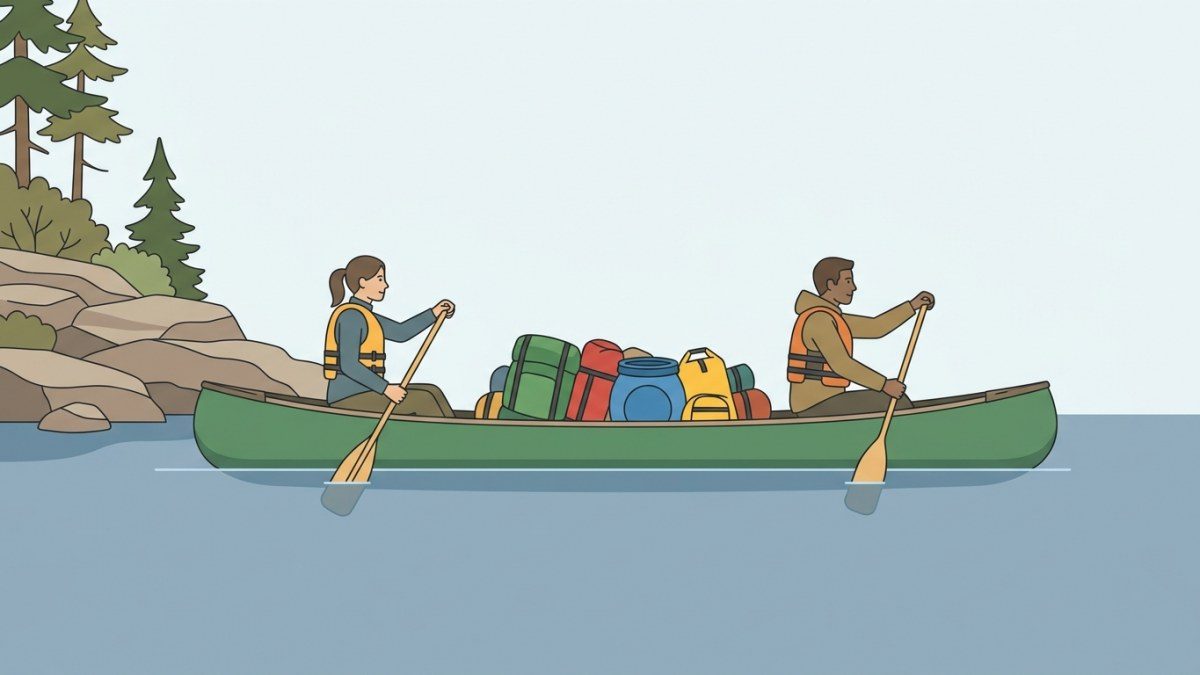
Secure packs so they won't float away in a capsize, but avoid long, loose lines that could entangle a swimmer.
Keep your day essentials within reach: water, snacks, sunscreen, a rain jacket and the map.
Do a Test Run Close to Home
Before your first real trip, pack everything and load the canoe at a local lake.
You'll quickly discover what doesn't fit, what's too heavy and what you'll need to reach during the day.
A single night at a campsite near your car shakes out problems with tents, stoves and sleeping gear while help is close by.
It's also the perfect time to practice canoe rescues with a loaded boat in warm,
shallow water and to try carrying the canoe and packs a short distance.
Knowing how your gear and your team behave makes the real trip far more relaxed.
Portages Made Easier
A portage is an overland trail between two bodies of water or around a rapid or dam.
Many canoes have a center yoke shaped to rest on your shoulders, letting one person carry the boat upside down while others carry the packs.
Two people can also carry the canoe together, one at each end.
Pack so you can cross each portage in as few trips as possible, and clip loose items to packs.
Watch your footing on rocks and roots, wear sturdy footwear and take breaks.
Rushing a heavy carry is how ankles get twisted. If a trail is long or hard to follow,
walk it first with a light pack to learn the way before you shoulder the canoe.
Choosing and Setting Up Camp
Aim to reach camp by mid-afternoon, which leaves time to find a site, set up and cook before dark.
Use designated sites where they exist.
Where dispersed camping is allowed, pick durable ground well back from the water, often around 200 feet, and follow the local rules.
Look up before you pitch your tent, and avoid spots under dead trees or large dead branches.
Choose a site with some shelter from wind, and avoid low spots that will collect rainwater.
Pull the canoe completely out of the water, flip it over and tie it to a tree or rock,
because wind and rising water can carry off an unsecured canoe overnight.
Food, Water and Wildlife
Treat all drinking water, however clear it looks.
Cook and store food away from your tent, and store food, trash and scented items according to local rules,
whether that means bear-resistant containers, hanging or designated lockers.
Even where bears aren't a concern, raccoons, rodents and birds are experts at raiding campsites.
Pack out everything you pack in, including food scraps.
Use established toilets where provided, and otherwise follow local guidance for human waste, typically a small cathole well away from water, trails and camp.
Plan simple meals that cook in one pot and pack them by day,
so dinner is easy to find when you're tired. Repacking food into sealed bags saves space,
keeps it dry and cuts down on the packaging you'll need to carry out.
Weather and Safety
Wind is the main reason canoe trips go off schedule.
Waves build quickly on open lakes, and a loaded canoe with low sides can take on water.
Paddle early, when winds are often lighter, follow shorelines rather than crossing wide open water and be willing to wait out rough conditions on shore.
Morning fog deserves the same patience, because it's easy to lose your bearings on open water, so wait for it to lift before crossing.
At the first sign of thunder, get off the water and away from open, exposed shores.
Dress for the water temperature, since capsizing a loaded canoe in cold water is serious, and practice canoe rescues before the trip.
Leave a detailed trip plan with someone at home, including your route,
campsites and the date and time they should call for help if they haven't heard from you.
Out Past the Last Road
Canoe camping rewards careful preparation with quiet mornings, starry nights and a sense of self-reliance that's hard to find anywhere else.
Start with a short, sheltered route, pack everything waterproof, load the canoe low and balanced and respect wind, wildlife and local rules.
After one night on the water, you'll likely be planning the next.
Sources and Further Reading
This article was reviewed by the BraverPlay editorial team against the official sources below. Rules, conditions and gear vary from place to place, so always check the latest guidance from local authorities before you head out.
- Leave No Trace Seven Principles, U.S. National Park Service: Camp at least 200 feet from lakes and streams, dig catholes 6 to 8 inches deep and 200 feet from water, and pack out all trash.
- Water Treatment Options When Hiking, Camping, or Traveling, Centers for Disease Control and Prevention (CDC): Lakes, rivers and streams can carry germs, so treat drinking water by boiling, or by filtering and then disinfecting it.
- Outdoor Activities: Inland Lake Weather Safety, National Weather Service (NOAA): Check the forecast before you go, stop activities when you hear thunder and head to shore to get off the water.
- Paddling Safety: Kejimkujik National Park, Parks Canada: Wind and waves are often strongest at midday, so paddle early or late, allow extra time for weather and share your trip plan.