
Anúncios
A campfire is the heart of many camping trips.
It warms cold hands, cooks dinner and gives everyone a reason to gather at the end of the day.
It also demands respect, because a fire that is built carelessly or left smoldering can escape and burn far beyond your campsite.
Anúncios
From checking whether fires are allowed to leaving the ring cold, every stage of a campfire has a right way to do it.
Master these basics and your fires will light faster, burn cleaner and stay exactly where you want them.
Check the Rules Before You Strike a Match
Fire rules change with the weather and the season, sometimes from one day to the next.
Before every trip, and again when you arrive, check with the land manager or campground staff for fire bans, restrictions and the current fire danger.
During hot, dry or windy periods, campfires may be banned entirely, even in established fire rings.
Some places allow fires only in provided rings or grills, and some backcountry areas prohibit them altogether or above certain elevations.
If fires are not allowed, or conditions simply feel too dry or gusty, skip the fire.
A lantern, warm layers and a hot drink from the stove still make for a perfectly good evening.
Gather the Right Materials
Every fire needs three sizes of fuel, prepared and within reach before you strike a match:
- Tinder: fine, dry material that catches a flame instantly, such as dry grass, wood shavings, dead pine needles or a store-bought fire starter.
- Kindling: dry sticks from about the thickness of a pencil up to your thumb, which catch from the tinder and build heat.
- Fuel wood: larger pieces, such as split firewood, that keep the fire burning steadily once it is established.
Collect more tinder and kindling than you think you need; running out halfway through lighting is one of the most common reasons fires fail.
Dry wood snaps cleanly, while wood that bends is green or damp and will mostly smoke.
Splitting larger pieces exposes their dry centers and helps them catch.
Where Your Firewood Comes From Matters
Moving firewood long distances can spread invasive insects and tree diseases,
so many areas ask you to buy firewood close to where you will burn it or to use certified heat-treated wood.
Where gathering is allowed, collect only dead and downed wood, ideally no thicker than your wrist so it burns completely to ash.
Never cut or break branches from living trees or standing dead ones, which provide habitat for wildlife.
Prepare a Safe Fire Site
Use an existing fire ring or grill whenever one is available.
It concentrates the impact in one place and is usually positioned away from hazards. Before lighting, check the area:
- Keep tents, chairs, gear and the woodpile well back; about 15 feet is a common guideline.
- Make sure no branches hang low over the ring.
- Clear dry leaves, grass and needles from around the ring.
- Have a full bucket of water and a shovel within reach before the first flame.
Watch the wind as well. Gusts carry sparks far from the ring,
and a fire that feels harmless at dusk can become dangerous if the wind rises later in the evening.
If it picks up, stop adding wood and put the fire out.
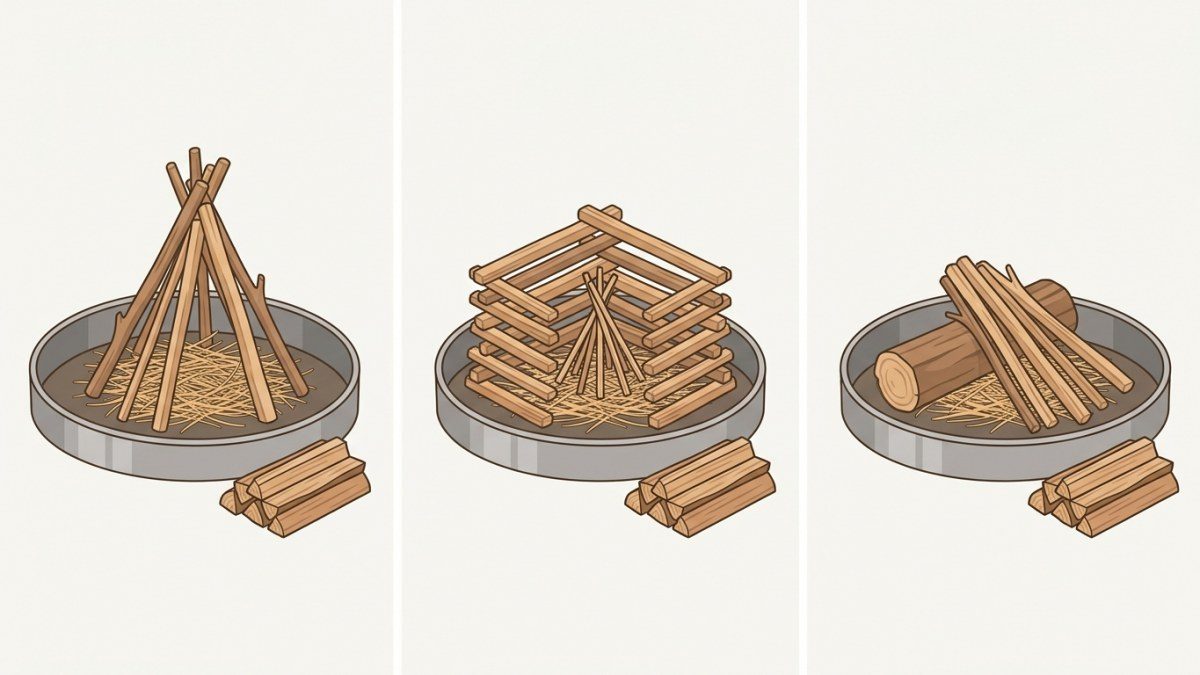
Three Reliable Ways to Build a Fire
Teepee
Place a loose bundle of tinder in the center, then lean kindling around it in a cone,
leaving a gap on the upwind side for lighting. The cone draws air upward and catches quickly.
As it burns, lean larger pieces against it.
This is the easiest lay for beginners and the fastest way to get a fire going.
Log Cabin
Build a small teepee, then stack pairs of sticks around it in alternating layers, like the walls of a cabin,
getting slightly smaller toward the top.
This lay burns steadily and collapses into an even bed of coals, which makes it ideal for cooking.
Lean-To
Lay one larger piece of wood beside your tinder,
or push a stick into the ground at an angle over it, and lean kindling against the support.
The support shields the young flame from wind on one side, which helps on breezy evenings.
Lighting and Tending the Fire
Light the tinder low and from the upwind side, so the breeze pushes the flame into the fuel.
If it struggles, blow gently at the base to feed it oxygen.
Add kindling gradually, then larger pieces once the fire is established, leaving gaps so air can circulate.
Smothering a young fire with big logs is the fastest way to kill it.
Never use gasoline, lighter fluid or other flammable liquids to start or revive a campfire; they can flare violently and cause serious burns.
Keep the fire only as big as you need, and add wood a piece or two at a time.
An adult should watch the fire at all times.
Keep children and pets a safe distance back, and never leave a fire unattended, even for a few minutes.
Burn only wood.
Trash, plastic, food scraps and packaging release toxic smoke, leave unburned residue and attract animals to the ring.
Keep synthetic jackets and sleeping bags back from the flames too, since a single spark can melt a hole in them.
Cooking Over the Fire
Flames look dramatic, but coals do the cooking.
Let a log cabin fire burn down until you have a bed of glowing embers,
then cook on a sturdy grill grate or in cast iron set securely over them.
Coals give steady, even heat, while tall flames scorch food on the outside and leave it raw inside.
Use long-handled tongs and spatulas and heat-resistant gloves, and keep pot handles turned away from the heat.
Rake some coals to one side to create a cooler zone for keeping food warm.
Wrap food in heavy-duty foil for easy cleanup, and pack the used foil out with your trash rather than leaving it in the ring.
Putting It Out Completely
A fire is not out until every ember is cold.
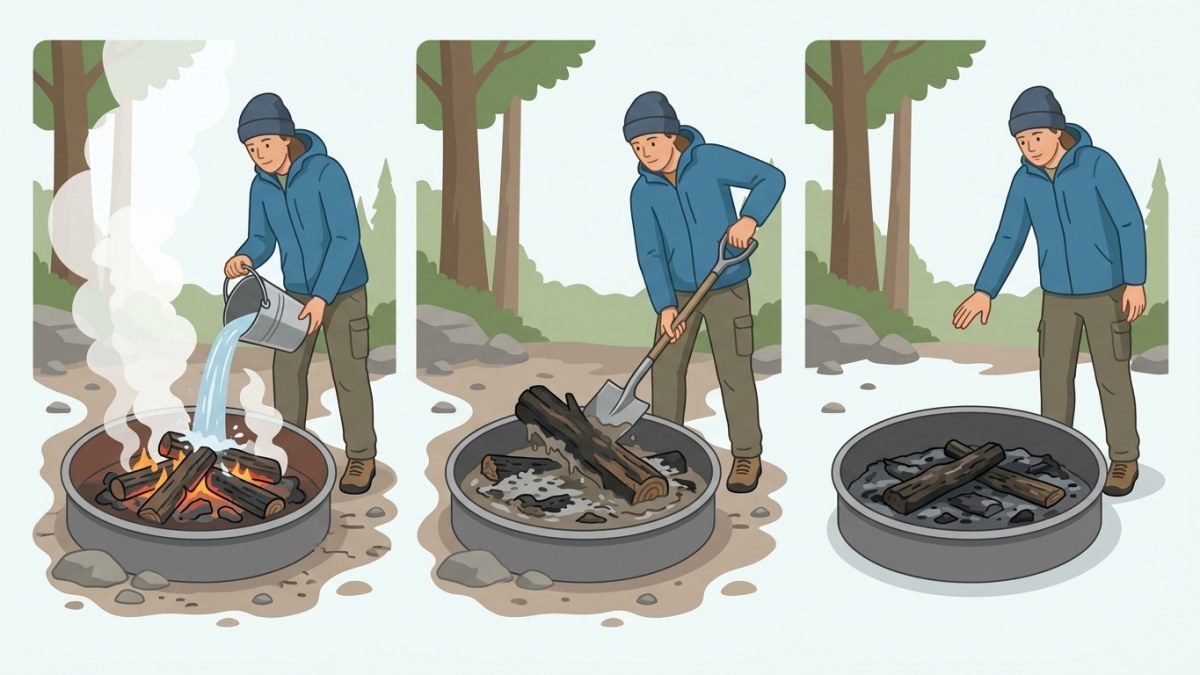
Stop adding wood well before bedtime or departure so the fire can burn down to ash, then follow these steps:
- Drown the fire with plenty of water, pouring slowly over all the embers, not just the glowing ones.
- Stir the ashes and embers with a shovel or stick, scraping partly burned wood so no hot spots hide underneath.
- Drown again until the hissing stops and no steam rises.
- Check for heat by holding the back of your hand just above the ashes. If you feel any warmth, keep adding water and stirring. When no heat remains, carefully touch the ashes and leftover wood to confirm they are cool.
Water is always best. If you truly run short, use every drop you have first, then mix soil or sand into the embers and stir thoroughly, and check for heat the same way.
Never simply bury hot coals: they can smolder underground for hours, reignite roots or burn someone who steps there later.
If any part of the ring is still too warm to touch, it is not ready to leave.
Dead Out, Every Time
Good campfires follow a simple pattern: check the rules, prepare the site, build small, watch it constantly and put it out cold.
Make those habits automatic and your fire will be what it should be, a warm,
safe gathering place that leaves nothing behind but cold ash in the ring.
Sources and Further Reading
This article was reviewed by the BraverPlay editorial team against the official sources below. Rules, conditions and gear vary from place to place, so always check the latest guidance from local authorities before you head out.
- Campfire Safety, Smokey Bear (USDA Forest Service): Check restrictions, stay 15 feet from tents and branches, build teepee, log cabin or lean-to lays, and drown, stir and feel until cold.
- Campfires, U.S. National Park Service: Keep gear 15 feet away and upwind, never leave a fire unattended, and stir dirt or sand through spread coals instead of burying them.
- Leave No Trace Seven Principles, U.S. National Park Service: Keep fires small, use only dead and down wood you can break by hand, and burn all wood and coals to ash.
- Campfires (Learn-to Camp), Parks Canada: Check for fire bans, buy firewood at or near where you use it, keep a water bucket nearby and put fires out completely.