
Anúncios
Every campsite is part of someone else's home.
Bears, raccoons, foxes, mice, ravens and squirrels all have excellent noses and a strong interest in easy calories.
Leave a bag of chips on the table or a cooler unlatched, and you may be feeding far more than your group.
Anúncios
Proper food storage protects your supplies, your gear and your safety, and it protects wildlife too.
It is simple once you know what attracts animals,
which storage methods your destination requires and which daily habits keep a camp uninteresting to hungry visitors.
Why Food Storage Matters
Animals that get human food once tend to come back for more.
Over time they lose their natural wariness of people, approach campsites boldly and can become aggressive.
Bears that become conditioned to human food are often relocated or killed, which is why careful storage genuinely saves animals' lives.
Smaller animals cause problems too. Rodents chew through tents and packs to reach a forgotten granola bar,
raccoons can pry open loosely closed coolers and birds such as ravens and jays are known to raid unattended tables and packs.
Human food is also unhealthy for wildlife.
On top of that, many parks and forests can fine campers for improper food storage, and some require specific containers.
Know What Counts as a Scented Item
To an animal, anything with a smell is worth investigating.
Store all of the following the same way you store food:
- Food, snacks, drinks other than plain water, and spices
- Trash, food wrappers and leftovers
- Cooking pots, stoves, utensils, dish soap and sponges
- Toothpaste, sunscreen, lip balm, deodorant, lotion and insect repellent
- Pet food, treats and bowls
- Coolers, even empty ones
In bear country, some guidance also suggests storing clothes that smell strongly of cooking with your food rather than sleeping in them.
Storage Methods and When to Use Each
The right method depends on the animals in the area and the rules set by the land manager,
which can differ between campgrounds only a few miles apart. Always check current local requirements before you go.
Food Lockers and Storage Boxes
Many developed campgrounds in bear country provide metal food lockers at each site.
Use them for everything scented, keep them latched whenever you are not actively taking something out and never prop the door open while you cook.
Bear-Resistant Canisters
Hard-sided canisters are required in some backcountry areas and are a reliable option almost anywhere.
Pack them tightly, close the lid fully and set them on flat ground well away from your tent,
away from cliffs, slopes or water where an animal could roll them.
Hard-Sided Vehicles
In some campgrounds, storing food out of sight in a locked,
hard-sided vehicle with the windows closed is allowed. In others, bears have learned to break into cars,
and vehicle storage is prohibited. Follow the posted rules.
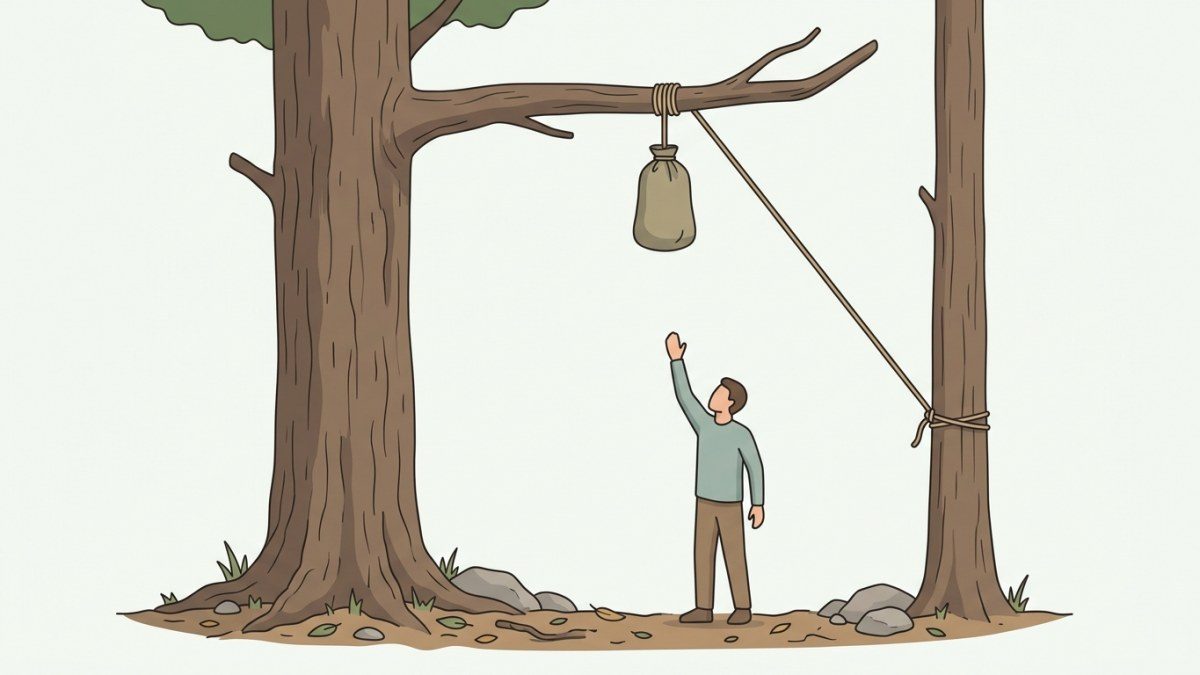
Hanging Food
Where hangs are permitted,
food bags are suspended from a tree branch well above the ground and out from the trunk,
beyond the reach of a climbing animal.
A good hang takes practice and suitable trees, and many areas with bears no longer consider hanging adequate,
so check whether it is accepted where you are going.
Smaller Critters
Even where bears are absent, rodents and raccoons are common.
Hard containers with tight lids, latched coolers and food kept in a vehicle or locker usually solve the problem.
Set Up a Smart Camp Layout
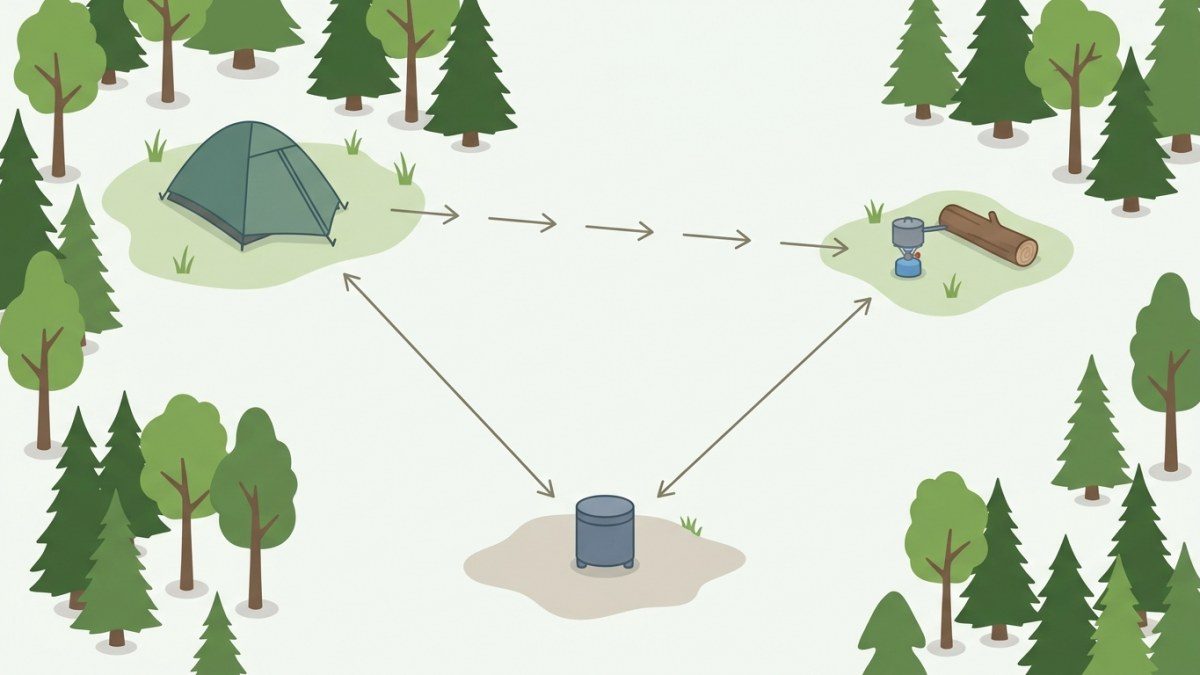
In bear country, think of camp as three separate areas: sleeping, cooking and food storage.
Cook and eat downwind of your tents and at a good distance from them,
often 200 feet (about 60 meters) or more, and store food away from both areas.
The goal is that food smells never drift over the place where you sleep.
Even in developed campgrounds with less wildlife pressure, keep cooking and eating at the picnic table and away from your tent.
Never keep food, snacks or scented toiletries inside your tent, not even a single candy wrapper in a jacket pocket.
Reduce Odors From the Start
The less your camp smells like food, the less interest it draws.
Odor control starts at home and continues through every meal:
- Repackage food into sealed bags or containers, which cuts both smell and bulky trash.
- In bear country, favor simple, low-odor meals over greasy, strong-smelling ones such as fried bacon or fish.
- Cook only what your group will eat, so there are no leftovers to store or scrape out.
- Keep a dedicated trash bag, sealed and stored with your food, rather than a loose bag hanging from the table.
- Wipe your hands and the table after eating, and keep cooking grease in a sealed container to pack out.
Some backpackers in bear country go a step further and eat dinner along the trail before reaching camp,
so cooking smells never touch the place where they sleep.
Everyday Habits That Keep Animals Away
- Never leave food unattended, even for a few minutes while you walk to the restroom.
- Clean up right after meals, including spills, crumbs and grease on the table and ground.
- Keep coolers latched and stored properly, never left on the picnic table overnight.
- Pack out all trash or use the campground's wildlife-resistant bins, closing the lids every time.
- Do not burn food scraps or packaging in the fire ring, where leftovers attract animals.
- Never feed wildlife, including birds, squirrels and chipmunks.
- Leave empty pack pockets unzipped at night, so curious rodents can look inside instead of chewing through.
If an Animal Gets Into Your Food
Never try to take food back from a bear or any large animal.
Keep your distance, gather your group and move away calmly. Follow the local wildlife guidance you read before the trip,
and report the incident to campground staff or rangers as soon as you can,
since they track animals that are becoming a problem.
For smaller animals, make noise to scare them off, then secure what is left and clean the area thoroughly.
Treat any food that has been chewed or opened by an animal as contaminated and throw it away.
Frequently Asked Questions
Is my cooler safe from bears?
A standard cooler is not bear-resistant, no matter how sturdy it looks.
Some coolers are certified as bear-resistant when properly locked, but local rules may still require a locker or vehicle.
Treat an ordinary cooler as something to store in the car or locker, not on the picnic table.
Do I need to store food carefully if there are no bears in the area?
Yes. Raccoons, rodents, foxes, coyotes and birds can all raid a camp, damage gear and become pests.
Good storage habits work everywhere.
Can I keep toiletries in my tent?
No. Toothpaste, lotion, lip balm and similar items have strong scents that attract animals.
Store them with your food, and brush your teeth near the cooking area rather than beside the tent.
Before You Head Out
Look up the food storage rules for your destination,
pack the right containers and plan a camp layout that keeps scents away from where you sleep.
Then stick to the habits every day of the trip.
A clean camp keeps you safe, keeps your food in your hands and helps keep wildlife truly wild.
Sources and Further Reading
This article was reviewed by the BraverPlay editorial team against the official sources below. Rules, conditions and gear vary from place to place, so always check the latest guidance from local authorities before you head out.
- Storing Food (Bears), U.S. National Park Service: Anything with a scent counts as food; bears that get it are often euthanized; set canisters on flat ground away from cliffs and water.
- Bears and Food Storage - Yosemite National Park, U.S. National Park Service: Keep food lockers latched, never keep food or toiletries in tents, and follow local rules on car storage and food hangs.
- Bear Resistant Products, Interagency Grizzly Bear Committee (IGBC): Certified coolers are bear-resistant only when locked; other food must be locked away or hung 10 feet up and 4 feet out.
- Finding and Setting Up a Campsite, U.S. National Park Service: In bear country keep 200 feet between cooking and sleeping areas, store food 200 feet away and don't sleep in cooking clothes.
- Hikers & Campers (Be Bear Aware), Interagency Grizzly Bear Committee (IGBC): Check local food storage rules before you go, keep scented items out of tents and never bury or burn garbage.