
Anúncios
Fishing from a kayak puts you right where the fish are: tucked into quiet coves,
drifting over weed beds and slipping into shallow water that bigger boats can't reach.
Kayaks are quiet, simple to maintain and easy to launch almost anywhere you can carry one,
Anúncios
which is why so many anglers have taken to them.
Fishing from a small boat does add a few challenges, from managing gear in a tight space to landing a fish without tipping.
Here's how to get started the right way, with a simple setup and safety habits that let you focus on fishing.
Choose a Stable, Practical Kayak
Most kayak anglers use sit-on-top kayaks.
They're wide and stable, the open deck makes it easy to reach gear and they're simple to climb back onto if you fall off.
Many fishing models include built-in rod holders, storage wells and mounting points, and some are stable enough to stand on in calm water.
Sit-inside kayaks work too, especially in cooler climates where staying dry matters, though they have less room for gear.
Pedal-driven fishing kayaks keep your hands free for casting and holding position, but they're heavier and need enough depth for the drive.
Shorter boats turn easily on small ponds and creeks, while longer ones cover distance and track better on big lakes and coastal water.
Rig It Simply
It's tempting to bolt on every accessory, but a clean, simple setup is easier to manage and safer if you capsize.
Start with:
- Rod holders behind the seat for transporting rods, plus one within reach for fishing
- Leashes for your paddle and rods, so a capsize or a slip doesn't send them to the bottom
- A small crate or storage bag in the rear well, holding a few tackle trays rather than your whole collection
- Pliers and a line cutter tethered where you can grab them quickly
- A short-handled net or fish grip for landing fish
- A bright flag or light to help other boaters see you, especially at dawn and dusk
Keep everything you use often within arm's reach.
Every time you twist around to dig through the back of the boat, you shift your balance and take your eyes off the water.
Before your first trip, sit in the kayak on land or in shallow water and rehearse.
Reach for each tool, set the paddle down and pick it up again and pretend to land a fish.
Anything that feels awkward on shore will be harder on the water.
Juggling the Paddle and the Rod
One of the trickiest parts of kayak fishing is managing a paddle and a rod at the same time.
Clip your paddle to the boat or rest it in a paddle holder while you fish, with a leash attached so it can't drift away.
While you're paddling, keep rods in holders angled back and out of the way,
so a stroke doesn't catch a line or knock a rod overboard.
Many anglers troll as they travel, trailing a lure behind the kayak while paddling between spots.
It's an efficient way to cover water,
but keep the rod secured in a holder and make sure you can reach it quickly when a fish strikes.
Safety Comes First
Always wear your life jacket, choosing one approved by your country's authority, such as the U.S. Coast Guard in the United States.
Fishing-specific designs have pockets for small tackle and are comfortable for long hours seated. Dress for the water temperature,
since cold-water shock can hit the moment you go in, and fish with a buddy when you can.
Practice getting back onto your kayak in warm, shallow water with your fishing gear aboard, so you know what stays attached and what floats away.
Keep hooks covered and knives sheathed, watch the weather closely and stay out of busy boat channels.
When you're sitting still with your head down over a tangled line, it's easy to lose track of wind and traffic.
Anchoring and Controlling Your Drift
Anchoring a kayak can be surprisingly dangerous if it's done wrong.
Never anchor in strong current, and never tie an anchor line to the side of the boat.
Current or wind pulling on a side-mounted line can tip a kayak over very quickly.
If you anchor, use an anchor trolley,
a pulley system that lets you move the anchor point to the bow or stern so the kayak lines up with wind or current.
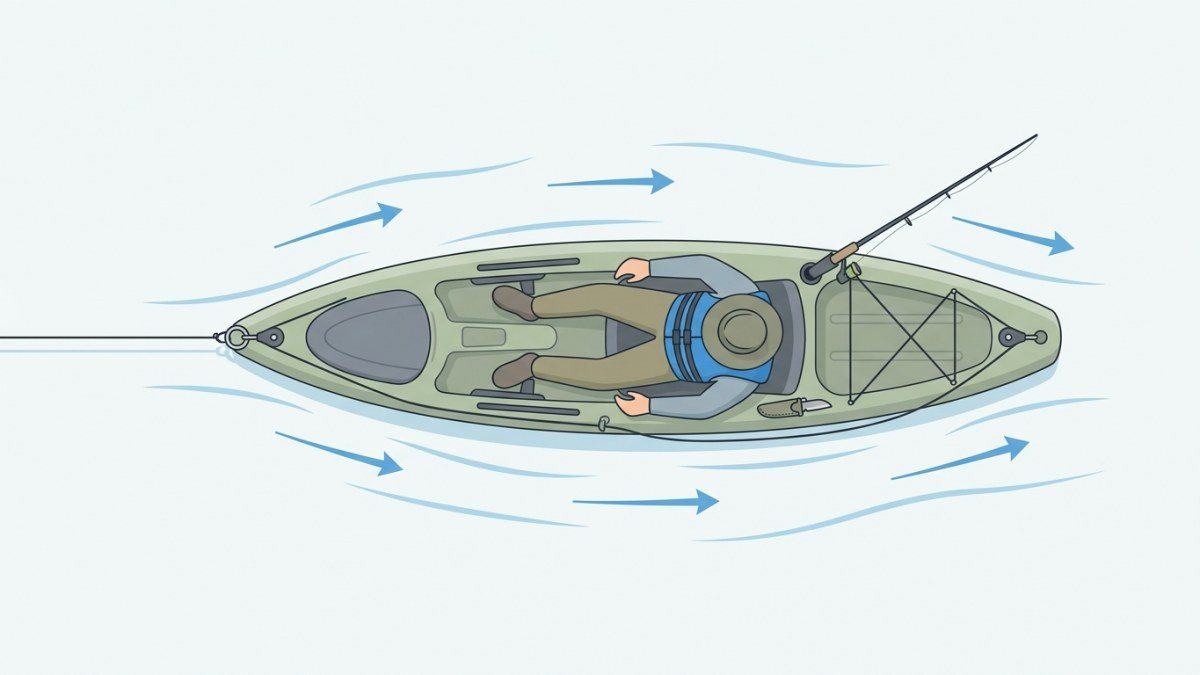
Keep a knife within reach so you can cut the line in an emergency.
In shallow water, a stake-out pole pushed into the bottom is a simple alternative, and a drift sock,
a small underwater parachute, slows your drift in wind so you can work an area more thoroughly.
Casting, Fighting and Landing Fish
Casting from a seated position takes a little practice.
Short, smooth casts are easier to control, and sidearm casts help avoid snagging anything behind you.
Point the bow toward your target when you can,
and always check around you before casting so you don't hook a partner or your own gear.
When you hook a fish, let the rod and drag do the work.
A strong fish may tow your kayak around, which is part of the fun,
but keep your weight centered and don't lean far over the side.
Bring the fish alongside the boat near your knees rather than behind you, then net it or lift it with a fish grip.
If you plan to release it, keep the fish in or near the water as much as possible,
handle it with wet hands and remove the hook quickly.
Wet hands help protect the protective slime coat that fish rely on for their health.
Where and When to Fish
Start in calm, protected water where you can focus on fishing rather than paddling.
Look for structure that fish use for food and cover, such as weed edges, lily pads, drop-offs, rocky points and submerged wood.
On rivers, fish the slower water around eddies and current seams, but stay well clear of fallen trees in current, which can trap a kayak.
Early mornings and evenings are often productive and usually calmer.
Move quietly and avoid banging gear against the hull, because one of a kayak's biggest advantages is how stealthily it can approach.
Know the Rules
Before you fish, check the local regulations. Many places require a fishing license, and rules on seasons,
size and catch limits and protected species vary widely by location and even by water body.
Boating rules also apply to kayaks in many areas, including requirements for life jackets and lights.
Local fisheries and boating authorities are the best sources.
Frequently Asked Questions
Can I fish from a regular recreational kayak?
Yes, on calm water with a simple setup.
You'll have less storage and fewer mounting points than a fishing model, so bring only a small tackle box,
one or two rods and a leash for each.
Should I stand up to fish?
Only if your kayak is designed for standing, the water is calm and you've practiced near shore in warm water.
Wear your life jacket, and sit down whenever a boat wake or gust approaches.
What if I hook something too big to handle?
Cut the line. No fish is worth a capsize, especially in cold or rough water.
Keep a line cutter within easy reach for exactly this situation.
Tight Lines and Calm Water
Kayak fishing combines two great pastimes into one quiet, rewarding day.
Start with a stable boat and a simple setup, leash your gear, wear your life jacket and anchor only when it's safe.
Check the local rules, choose calm water and let the kayak's stealth bring you closer to the fish.
Sources and Further Reading
This article was reviewed by the BraverPlay editorial team against the official sources below. Rules, conditions and gear vary from place to place, so always check the latest guidance from local authorities before you head out.
- Life Jacket Wear / Wearing Your Life Jacket, U.S. Coast Guard Boating Safety: Wear a Coast Guard-approved life jacket that fits snugly every time you're on the water.
- Choosing Lifejackets and Personal Flotation Devices (PFDs), Transport Canada: Many anglers who die in boating accidents weren't wearing a flotation device; angler-specific designs make all-day wear easier.
- Catch and Release Fishing Best Practices, NOAA Fisheries: Release fish with wet hands, dehook them in the water when possible and keep air exposure short to protect their mucus coating.
- Cold Shock, National Center for Cold Water Safety: Cold-water shock can hit the moment you fall in, even for strong swimmers.