
Anúncios
Your footwear is the one piece of gear that touches the trail with every step, so it shapes how the whole hike feels.
The wrong pair can bring blisters, sore arches and slipping on steep ground, while the right pair quietly disappears from your thoughts.
There is no single best boot.
Anúncios
The right choice depends on the shape of your feet, the ground you walk on, the weather you hike in and how much you carry.
Here is how to sort through the options and test the fit before you commit.
Start With Your Trails, Not the Shelf
Before you try anything on, think about where you actually hike.
Smooth, well-graded forest paths ask very little of a shoe.
Rocky alpine routes, muddy spring trails and multi-day trips with a heavy pack ask a lot more.
Hiking footwear falls into a few broad groups:
| Type | Best for | Trade-offs |
|---|---|---|
| Trail running shoes | Well-maintained trails, light packs, warm weather and fast hikers | Least protection and support; wear out sooner |
| Hiking shoes | Day hikes on mixed terrain with a light pack | Little ankle coverage; grit and pebbles get in more easily |
| Mid-cut hiking boots | Rocky or rooty trails, wet ground and moderate loads | Heavier and warmer than shoes; need some break-in |
| Full backpacking boots | Rough, steep or off-trail terrain and heavy packs | Heaviest and stiffest; longest break-in |
Many day hikers are happiest in hiking shoes or mid-cut boots.
Heavier boots make sense when the terrain is rough or you are carrying overnight gear.
What Ankle Height Does and Does Not Do
A higher collar keeps out gravel, snow and trail grit, protects your ankle bones from knocks against rocks, and helps in shallow water and mud.
With a heavy pack, many hikers also find that a snug, higher boot feels more stable on uneven ground.
Height is not a guarantee against a rolled ankle, though.
Careful foot placement, good balance and strong lower legs matter just as much.
If you have a history of ankle sprains, a mid or high boot may add confidence, but keep working on strength and balance too.
How to Get the Fit Right
Fit matters more than any feature.
A boot loaded with technical extras that pinches your foot will hurt far more than a simple one that fits well.
Shop at the Right Time and With the Right Socks
Feet swell over the day and during long walks, so try boots on in the afternoon or evening.
Bring the socks you hike in and any insoles or orthotics you use.
Have both feet measured for length and width, since many people have one foot slightly larger than the other, and fit the larger foot.
Check Length, Width and Heel Hold
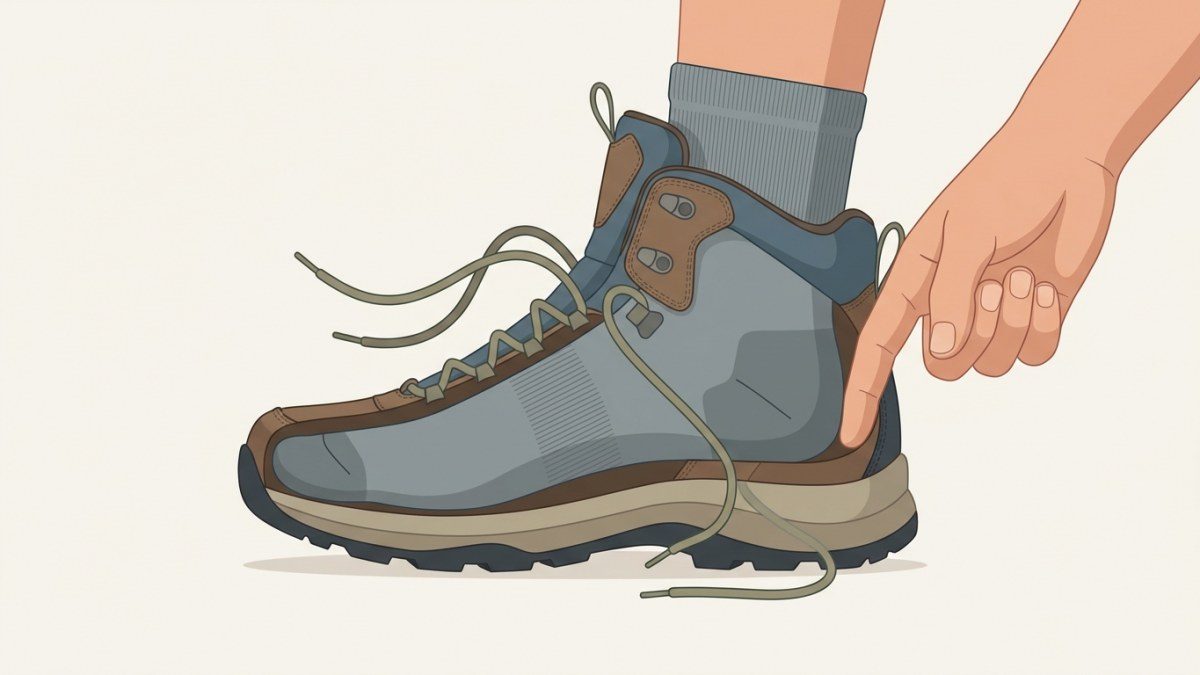
- Length: With the boot unlaced, slide your foot forward until your toes touch the front. You should be able to fit about one finger behind your heel.
- Width: Your foot should not bulge over the sole or feel squeezed across the widest part. Different models use different shapes, so try several.
- Heel: Once the boot is laced, your heel should lift only slightly as you walk. A lot of movement leads to blisters.
- Toes: You should be able to wiggle your toes freely.
Test on a Slope
Walk around for at least 15 minutes.
If the store has an incline ramp, walk down it, and make sure your toes do not jam into the front of the boot.
Toe bang on descents is a common cause of bruised toenails and sore feet after a long downhill.
Materials: Leather, Synthetics and Waterproof Linings
Full-grain leather is durable, resists water and abrasion, and molds to your foot over time, but it is heavier and takes longer to break in.
Synthetic fabrics and split leather are lighter, dry faster and need little break-in, though they usually wear out sooner.
Many boots include a waterproof, breathable membrane.
It keeps out rain, dew and puddles, which is valuable in cool, wet climates and on snowy shoulder-season trails.
The trade-off is heat, because waterproof boots run warmer, and once water pours in over the top, they are slow to dry.
In hot, dry places or on trails with frequent stream crossings, many hikers prefer non-waterproof footwear that drains and dries quickly.
Soles, Midsoles and Traction
Turn the boot over.
Deep, widely spaced lugs grip mud and loose soil and shed debris, while shallower lugs are fine for hard-packed trails.
A distinct heel edge helps with braking on descents. Softer, stickier rubber grips rock well but may wear faster.
The midsole provides cushioning and stiffness. Softer, lighter foams feel comfortable on smooth trails,
while firmer midsoles and internal plates protect your feet from sharp rocks and reduce fatigue under a heavy load.
Try flexing the boot: a light hiking shoe should bend fairly easily near the ball of the foot, while a backpacking boot should resist.
Break Them In and Lace Them Well
Wear new footwear around the house first, so you can still return it if something rubs.
Then build up gradually with a walk around the neighborhood, a short hike and finally a longer outing.
Stiff leather boots need more time than light synthetic shoes.
Lacing can solve many fit problems.
If your heel slips, use the top eyelets to tie a heel lock, sometimes called a runner's loop,
which pulls your heel back into the boot.
If the top of your foot feels pressure, skip crossing the laces over that spot.
Snug the laces a little before a long descent so your foot does not slide forward.
Know When to Retire a Pair
Footwear wears out gradually, so the signs are easy to miss.
Watch for lugs worn smooth, midsoles with deep creases or a flat, dead feel,
uppers that are cracking or separating from the sole, and waterproof boots that suddenly leak.
New aches in your feet, knees or hips after hikes that used to feel easy can also mean the cushioning is gone.
Frequently Asked Questions
Are trail running shoes good enough for hiking?
For many day hikes on maintained trails, yes. They are light and comfortable, and they dry fast.
They offer less protection from rocks and less support under a heavy pack, so they suit hikers with strong ankles and light loads best.
Should I buy hiking boots a size larger than my usual shoes?
Many hikers end up about a half size larger than their everyday shoes to allow for thicker socks and foot swelling, but not everyone does.
Ignore the number on the box and trust the fit tests: toe room on descents, a secure heel and no pressure points.
Do I need waterproof boots?
Not always. They shine in cold, wet, muddy or snowy conditions.
In hot weather, or where you will wade through streams, breathable, quick-drying footwear is often more comfortable.
The Bottom Line
Choose the lightest footwear that gives you enough protection and support for your trails and your load, then put fit ahead of everything else.
Shop late in the day with your hiking socks, test on a slope, break them in gradually,
and replace them when the cushioning or traction wears out. Your feet will thank you on every mile.
Sources and Further Reading
This article was reviewed by the BraverPlay editorial team against the official sources below. Rules, conditions and gear vary from place to place, so always check the latest guidance from local authorities before you head out.
- How to Choose Footwear for Hiking, Washington Trails Association: Trail runners, hiking shoes and boots compared, waterproof trade-offs, testing on a slope, heel hold and toe room, and when to replace footwear.
- Athletic Shoes, American Academy of Orthopaedic Surgeons (OrthoInfo): Trying shoes on late in the day with your usual socks, a heel that is held firmly, room to wiggle your toes and at least half an inch in front of your longest toe.
- How to prepare for a hike, Parks Canada: Wearing footwear that gives support, grip and protection and suits the trail you choose.