
Anúncios
Rain changes a camping trip, but it does not have to ruin one. Forests smell richer,
crowds thin out and there is something deeply cozy about listening to raindrops on a tight rainfly while you stay warm and dry inside.
The key is preparing for water before it arrives.
Anúncios
Staying comfortable in wet weather comes down to three things: keeping water off you,
keeping it out of your shelter and keeping dry gear separate from wet gear.
Each gets easier with the right preparation, from the moment you pack to the moment you hang your tent to dry at home.
Prepare Before You Leave
Check the forecast for your destination, not just your hometown, and look beyond rain totals.
Light or steady rain is manageable with good gear.
Thunderstorms, flood warnings, high winds or heavy rain on already saturated ground are good reasons to reschedule.
If you go, pack for wet conditions:
- A waterproof rain jacket and rain pants for everyone
- Quick-drying layers of wool or synthetic fabric instead of cotton
- Extra socks and a dedicated set of dry sleep clothes
- Dry bags or heavy-duty trash bags to line packs and protect sleeping bags
- A large tarp, cord and a few extra stakes
- Camp towels or absorbent cloths for wiping up condensation
- Reliable fire starters and a waterproof container for matches or lighters
- Camp shoes or sandals so your hiking footwear can dry
Before the trip, make sure your tent's seams are sealed and the fly's waterproof coating is intact.
Pitching the tent at home and spraying it with a garden hose reveals leaks while you can still fix them.
Pick the Right Spot and Pitch It Tight
In the rain, drainage is everything.
Choose slightly raised, firm ground, and avoid dips, flat spots at the base of a slope and anywhere water has clearly pooled before.
Stay out of dry washes and away from streambanks that could flood.
Trees can offer some shelter, but never pitch under dead branches.
If you can, rig your tarp first and pitch the tent beneath it, so the inner tent stays dry during setup.
Tuck the groundsheet completely under the tent floor. Stake the fly taut,
use every guy line and make sure the fly does not touch the inner tent at any point,
since contact lets water soak through.
Face the door away from the wind so rain does not blow in every time you open it.
Rig a Tarp for Living Space
A tent keeps you dry at night, but a tarp gives you somewhere to cook, eat and relax during the day.
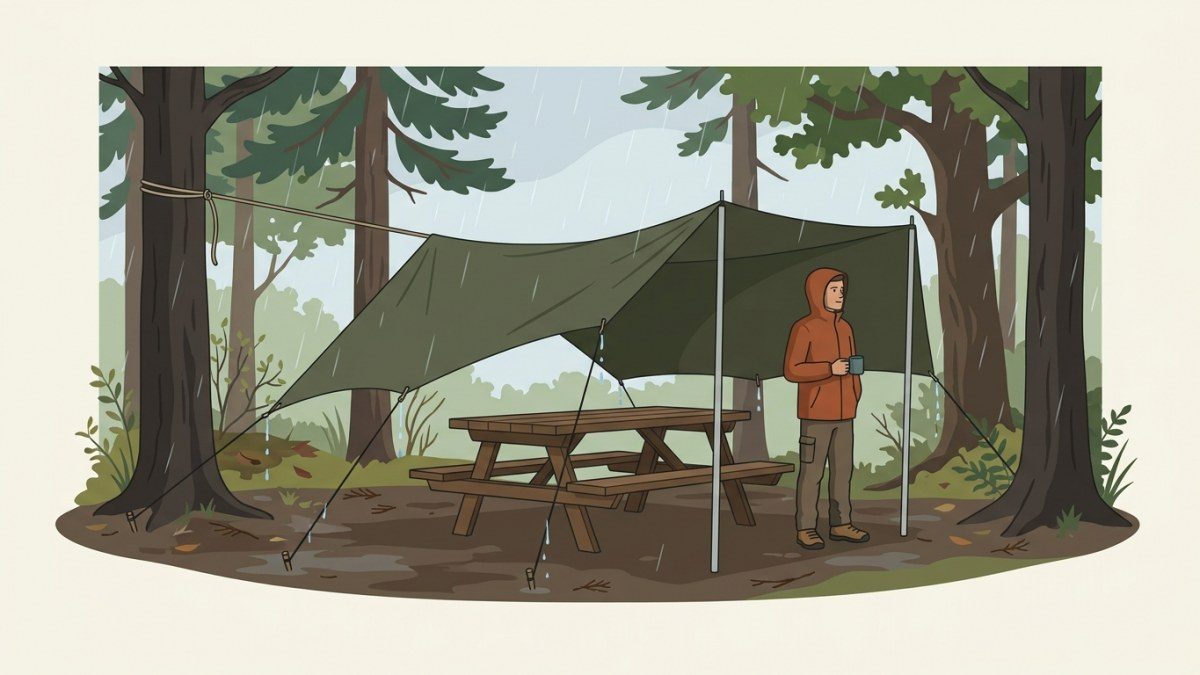
Tie a ridgeline between two trees at a height you can stand under, drape the tarp over it and stake or tie out the corners.
Lower one side toward the wind, and keep the tarp angled so water runs off instead of pooling.
A sagging pocket of water can tear a tarp or dump its contents on the group.
Tie a short piece of string around each line where it meets the tarp so drips follow the string and fall away instead of running along the line.
If you cook under the tarp, keep the stove on a stable surface near the open side,
well clear of the fabric, and never cook in an enclosed space.
Manage Moisture Inside the Tent
Condensation is often the biggest source of dampness on a rainy trip.
Warm, moist air from your breath and damp clothes meets the cool tent walls and turns into droplets.
Open the fly vents and, if the wind allows, crack a door on the sheltered side to keep air moving.
Create separate zones for wet and dry gear:
- Vestibule: wet rain gear, muddy shoes and packs stay here, outside the inner tent.
- Just inside the door: a small towel or mat for drying off as you come in.
- Sleeping area: only dry clothes and bedding, kept in dry bags until you use them.
Wipe the tent walls with a cloth each morning,
and keep your sleep clothes sealed away so there is always one warm, dry outfit waiting for you at bedtime.
Keep Spirits Up on a Wet Day
Comfort in the rain is as much about morale as gear.
Hot drinks and warm meals under the tarp make a gray afternoon feel cozy, and regular snacks keep everyone's energy and body heat up.
Pack a deck of cards, a book or a small game for long, wet stretches.
Do not assume you have to stay under cover all day.
In good rain gear, a short walk can be wonderful: waterfalls run strong, mushrooms appear and the forest glows green.
Just come back before you get soaked through, and change into dry layers as soon as you return.
Stay Safe When Storms Roll In
A tent offers no protection from lightning.
If you hear thunder, head for a hard-topped vehicle or an enclosed building if one is nearby,
and wait 30 minutes after the last thunder before going back out. If you are caught away from shelter, get off peaks,
ridges and open ground, stay away from isolated tall trees and water, and spread your group out.
Heavy rain also raises the risk of flash floods and falling branches.
Listen for rising water and keep an eye on streams near camp.
Cool rain combined with wind can lead to hypothermia even in summer, so change out of wet clothes promptly and keep eating and drinking regularly.
Packing Up Wet
Sometimes the rain never stops. Pack the inner tent first, while it is still sheltered under the fly,
and keep it separate from the wet fly by stuffing the fly into its own bag or an outer pocket.
Keep sleeping bags and dry clothes sealed in waterproof bags until you get home.
At home, set up the tent or hang each piece to dry completely within a day or so.
Tents, tarps and sleeping bags stored damp develop mildew, which causes stains and odors and can damage waterproof coatings.
Frequently Asked Questions
Should I put a tarp under my tent?
Yes, a groundsheet protects the floor and adds a barrier against moisture, but it must be smaller than the tent floor or folded under.
If it sticks out, it collects rain and channels it straight beneath you.
Should I dig a trench around my tent?
No.
Trenching damages the site, is prohibited in many places and is unnecessary with a modern tent that has a waterproof, bathtub-style floor.
Choosing well-drained ground works far better.
How do I dry out wet gear at camp?
Hang items under the tarp where air circulates, and take advantage of any break in the weather by draping gear in the sun and wind.
Slightly damp base layers dry with body heat as you hike, but always save one dry set for sleeping.
Rain Is Part of the Adventure
With a well-drained site, a taut fly, a sturdy tarp and a clear system for wet and dry gear,
rain becomes background music rather than a crisis.
Prepare properly, respect thunderstorms and floods, and a rainy trip can turn out to be one of your favorites.
Sources and Further Reading
This article was reviewed by the BraverPlay editorial team against the official sources below. Rules, conditions and gear vary from place to place, so always check the latest guidance from local authorities before you head out.
- Safety Guidelines: Lightning, U.S. Centers for Disease Control and Prevention (CDC): Tents give no lightning protection; get off ridges, avoid isolated trees and water, and separate group members.
- Lightning Tips, National Weather Service (NOAA): Shelter in a building or hard-topped vehicle when you hear thunder, and stay there 30 minutes after the last thunder.
- Flood Related Hazards, National Weather Service (NOAA): Flash floods can turn small streams and dry washes into torrents quickly, even from rain that fell miles upstream.
- Preventing Hypothermia, U.S. Centers for Disease Control and Prevention (CDC): Hypothermia can occur above 40°F when someone is chilled by rain, sweat or wet clothing.
- Tents and tarps (Learn-to Camp), Parks Canada: Pitch a tarp over a taut ridgeline between two trees, and use guy lines to keep the fly taut and off the tent walls.