
Anúncios
Falling asleep to the sound of waves and waking up to sunrise over the water is hard to beat.
Beach camping offers wide horizons, cooling breezes and a sense of space that is rare in the forest.
It also comes with challenges that inland campers never face.
Anúncios
In many places the tide moves the edge of your campsite twice a day,
soft sand will not hold ordinary stakes,
the wind rarely stops and sun and salt work on your skin and gear.
Understand those forces and a beach trip becomes safe, comfortable and unforgettable.
Check the Rules and the Beach First
Camping is allowed on only some beaches, and those that permit it often have specific rules.
Some require permits or designated sites, restrict where vehicles can drive,
limit fires and dogs or close areas during nesting seasons for shorebirds and sea turtles.
Some nesting beaches also ask visitors to keep lights low or shielded at night.
Look up current regulations from the land manager before you go, and read the signs at the beach access point.
Check the marine forecast and tide tables as well as the regular weather forecast.
Strong winds, storm surge and large swells can make a beach unsafe even on a sunny day.
Plan your water supply too, since many beaches have no drinking water, and bring more than you would inland,
because sun, wind and salt air are dehydrating.
Understand the Tides
Tides are the regular rise and fall of the sea, and their timing and size vary from place to place.
Tide tables list the predicted times and heights of each high and low tide for a specific location.
Look for the highest tide during your whole stay, not just the one on the evening you arrive.
A few patterns are worth knowing:
- Spring tides, which occur around the new and full moon, bring higher highs and lower lows than average.
- Storms and strong onshore winds can push water well above the predicted height.
- The wrack line, a band of seaweed, shells and debris, marks where recent high tides reached.
- Headlands and cliffs can become impassable at high tide, so time beach walks carefully to avoid being cut off.
On some coasts, occasional larger waves surge much farther up the beach than the rest, without warning.
Never turn your back on the ocean when you are near the waterline, and keep children close.
Choose a Safe Spot for Your Tent
Pitch well above the highest wrack line you can find, with extra margin for storm surge and big waves.
Avoid the base of eroding bluffs or cliffs, where sand and rock can fall,
and the low ground where a creek or river meets the sea, which can flood quickly after rain.
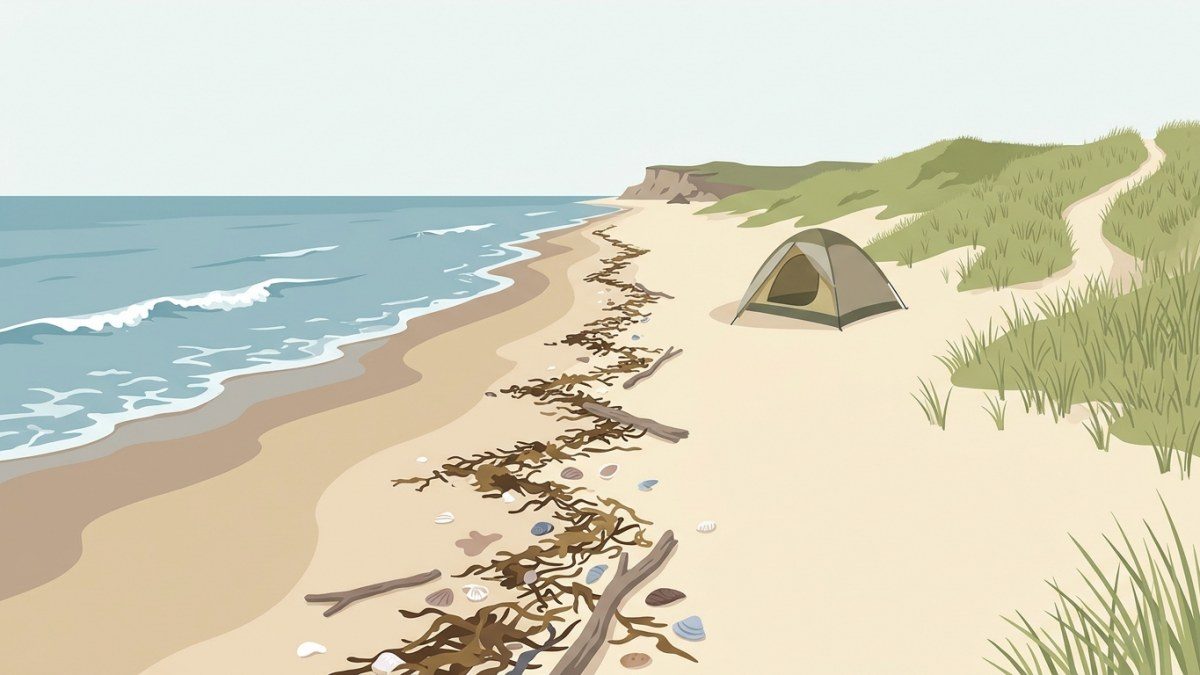
Dunes and the plants that grow on them hold beaches together and are easily damaged,
and many are protected. Stay off them and use established paths.
You can often find some shelter from the wind on the landward side of the beach near the dunes,
as long as you are not on the vegetation itself.
Think about access, too.
Carrying gear over soft sand is slow and tiring, so consider how far the site is from where you park,
and make sure a rising tide cannot cut off your route back.
Anchor Your Tent in Sand
Standard thin stakes pull straight out of dry sand. You have better options:
- Sand stakes: longer, wider stakes designed to grip loose ground.
- Buried anchors: fill stuff sacks or small bags with sand, tie a guy line around each one and bury it deeply, about a foot down or more, with the line coming up at an angle.
- Horizontal stakes: lay a regular stake or a stick sideways in a trench, tie the line to its middle and bury it firmly.
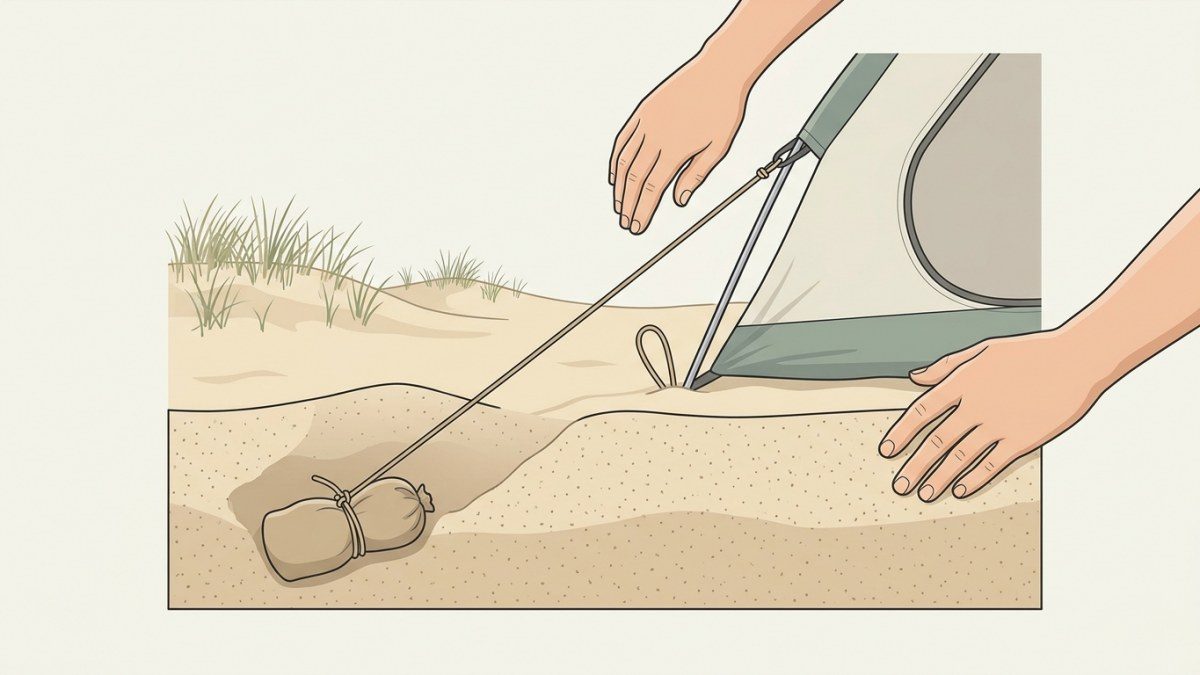
Use every guy line the tent offers and keep them taut.
Wet, packed sand holds better than dry, loose sand, but it is usually wet because the tide reaches it, so do not pitch there.
Digging out buried anchors takes effort in the morning, so leave a loop of line above the surface to help you find and pull them.
Work With the Wind
Coastal breezes often shift through the day, commonly blowing onshore in the afternoon and easing or reversing at night.
Pitch a low-profile tent with its narrow end facing the strongest wind,
and keep the door on the sheltered side so sand does not blow in every time you open it.
Secure everything you are not holding.
Chairs, towels, plates and empty bags blow away easily and end up as litter that can harm wildlife.
A windscreen helps your stove, but never fully enclose a canister stove,
and never cook inside the tent or its vestibule to escape the wind.
Keep Sand, Sun and Salt Under Control
Sand gets into everything, but you can keep it manageable.
Set a mat or towel outside the door, brush off feet and legs before getting in and keep a small brush inside the tent.
Store food and gear in lidded bins or sealed bags.
The beach offers little natural shade, and sunlight reflects off sand and water.
Bring a shade shelter, wear sun-protective clothing and a wide-brimmed hat, and reapply sunscreen often.
Salt air and spray corrode metal zippers, poles and stoves,
so rinse your gear with fresh water after the trip and dry it completely before storing it.
Pack for the Beach
A few extra items make beach camping far more comfortable. Add these to your usual camping list:
- Sand stakes or bags to fill as buried anchors, plus extra guy line
- A shade shelter or tarp that can be staked low in wind
- A doormat, a small brush and a few lidded bins to keep sand out
- Plenty of fresh water for drinking, cooking and rinsing salty skin and gear
- Sun-protective clothing, a wide-brimmed hat, sunglasses and sunscreen
- Sealable bags to protect phones and cameras from sand and spray
Frequently Asked Questions
Can I have a campfire on the beach?
Only where local rules allow it, and only in designated rings or areas.
Never bury a fire in sand to put it out,
because buried coals can stay hot for hours and seriously burn someone who walks there later.
Drown it with water and stir until it is cold.
How far from the water should I pitch my tent?
There is no single safe distance, because tides and beaches vary.
Use the tide tables to find the highest tide during your stay,
pitch above the highest wrack line and leave a generous buffer for waves and wind.
Which animals raid beach campsites?
Gulls, crows, raccoons, foxes and even crabs can be culprits, depending on the region.
Store food in hard, sealed containers or your vehicle where allowed, and never leave snacks or trash unattended.
Before the Tide Turns
Beach camping is about respecting the forces that shape the shore.
Check the rules and the tide tables, pitch well above the high-tide line,
anchor your tent for sand and wind and protect yourself and your gear from sun and salt.
Do that, and the sound of the surf will be the only thing keeping you company at night.
Sources and Further Reading
This article was reviewed by the BraverPlay editorial team against the official sources below. Rules, conditions and gear vary from place to place, so always check the latest guidance from local authorities before you head out.
- What are spring and neap tides?, NOAA National Ocean Service: Spring tides around the new and full moon bring higher high tides and lower low tides than average.
- What is a NOAA tide table?, NOAA National Ocean Service: Tide tables give the predicted times and heights of high and low tide for specific coastal locations.
- Sneaker Waves, National Weather Service (NOAA): Sneaker waves surge far up the beach without warning; check surf and tide forecasts and never turn your back on the ocean.
- Campfire Safety, Smokey Bear (USDA Forest Service): Put a campfire out by drowning it with water and stirring until cold, not with dirt or sand alone.
- Portable Heaters & Camping Equipment (Carbon Monoxide), U.S. Consumer Product Safety Commission (CPSC): Using camp stoves, heaters or lanterns inside tents can cause fatal carbon monoxide poisoning.