
Anúncios
An overnight backpacking trip is the perfect introduction to the backcountry: long enough to feel like a real adventure,
short enough that small packing mistakes are manageable.
The challenge is carrying everything you need, and nothing you do not, on your back.
Anúncios
This checklist is organized by category,
from the big items that make up most of your weight to the small safety essentials that are easy to forget.
Adjust it for your season, terrain and local regulations, and use it to pack and double-check before every trip.
The Big Three: Pack, Shelter and Sleep System
Your backpack, shelter and sleep system are usually the heaviest and bulkiest items you carry, so they have the biggest effect on your comfort.
- Backpack: many hikers find that a pack of roughly 35 to 55 liters holds enough for one or two nights, though bulkier gear needs more room. Fit matters more than capacity; the hip belt should carry most of the weight.
- Pack liner or rain cover: a heavy-duty trash bag inside the pack works well to keep the contents dry.
- Tent or shelter: with its poles, stakes and guy lines; a footprint is optional.
- Sleeping bag or quilt: rated for the expected overnight low and packed in a waterproof stuff sack.
- Sleeping pad: insulated enough for the season, plus a small patch kit if it is inflatable.
- Pillow: an inflatable pillow or a stuff sack filled with spare clothes.
Kitchen and Water
Keep the kitchen simple for an overnight.
Many backpackers boil water for dehydrated meals and hot drinks and skip complex cooking entirely. Oatmeal or granola for breakfast,
tortillas with nut butter or hard cheese for lunch and a quick-cooking or dehydrated dinner cover a night out with very little weight.
- Stove and enough fuel for the trip, plus a lighter and a backup such as waterproof matches
- A small pot with a lid, a long-handled spoon and a mug
- Meals and snacks for the trip, plus extra food in case of a delay
- Food storage that meets local rules, such as a bear-resistant canister where required
- Water bottles or a reservoir, with enough capacity for dry stretches
- A water treatment method: filter, purifier, chemical treatment or a plan to boil
- A small bag for trash, since everything you carry in must come out
Research water sources along your route before you leave, and carry more when sources are far apart or uncertain.
Treat all backcountry water, however clear it looks.
If you rely on boiling, the widely used standard is a rolling boil for one minute,
or three minutes at elevations above about 6,500 feet (roughly 2,000 meters).
Clothing Layers
Pack clothes as a system rather than as outfits.
Everything should be wool or synthetic, since cotton stays wet and cold.
- Hiking clothes: a moisture-wicking shirt, shorts or pants, and underwear
- Insulating layer: a fleece or lightweight puffy jacket
- Rain jacket, plus rain pants in cool or wet conditions
- Warm hat and light gloves, even in summer at higher elevations
- Sun hat and sunglasses
- Hiking socks, plus a dry pair reserved for sleeping
- Sleep layer: a base layer top and bottom kept dry in your pack
- Broken-in hiking boots or trail shoes
Navigation and Safety Essentials
These items rarely get used on a smooth trip, but they matter enormously when something goes wrong.
Many hikers build their kit around the widely taught Ten Essentials:
- Navigation: a map of the area, a compass and a phone or GPS with offline maps, plus the skills to use them.
- Headlamp: with spare batteries or a charged power bank.
- Sun protection: sunscreen, lip balm with SPF, sunglasses and a hat.
- First aid kit: including blister care and any personal medications.
- Knife or multi-tool: with repair supplies such as duct tape and a few zip ties.
- Fire: a lighter, waterproof matches and fire starter for emergencies.
- Emergency shelter: a lightweight emergency bivy or space blanket.
- Extra food: enough to cover an unplanned delay.
- Extra water: or the means to treat more.
- Extra clothes: enough to get through an unplanned night in the conditions you expect.
Add a whistle, and consider a satellite messenger or personal locator beacon for areas without cell coverage.
Always leave your route and expected return time with someone you trust.
Hygiene and Leave-No-Trace Kit
Pack a small,
dedicated hygiene kit in its own zippered bag so it is easy to find and easy to store with your food at night:
- A small trowel for digging catholes, where that method is allowed
- Toilet paper and a sealable bag to pack it out
- Waste bags if the area requires you to pack out human waste
- Hand sanitizer
- Toothbrush and a small tube of toothpaste
- Insect repellent, depending on the season
Where catholes are allowed, dig them about 6 to 8 inches deep and at least 200 feet from water,
trails and camp, then cover them completely.
Nice-to-Haves and What to Leave Home
A few small luxuries can make camp much more pleasant: lightweight camp shoes, a foam sit pad,
a small book or a warm drink mix for the evening. Choose one or two, not all of them.
Leave behind full-size toiletries, extra outfits, glass containers, heavy cookware and multiple just-in-case gadgets.
If an item does not serve a clear purpose on this specific trip, it probably stays home.
How to Pack It All
Place your sleeping bag and camp clothes at the bottom of the pack, since you will not need them until evening.
Put the heaviest items, such as food, water and the cooking kit, in the middle and close to your back, roughly between your shoulder blades.
Lighter, bulkier items fill the space around them, while the things you need during the day, like rain gear, snacks,
water treatment, the map and the first aid kit, go on top or in outer pockets.
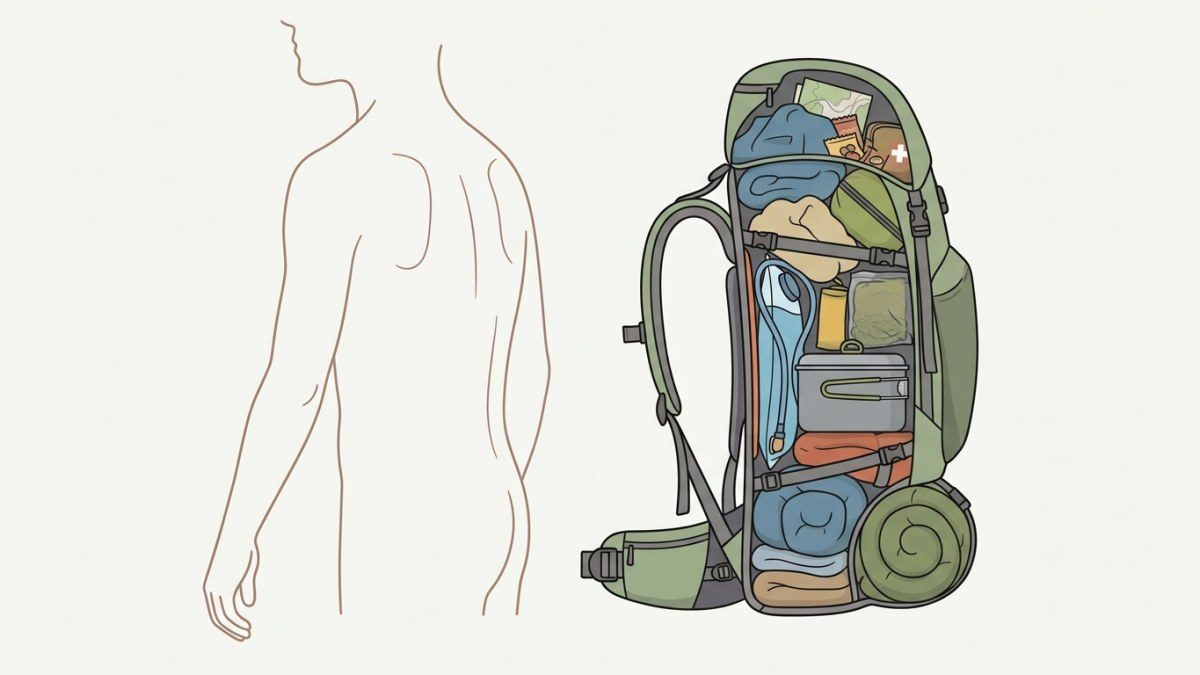
Use empty spaces well: nest the stove and a small fuel canister inside your pot, and stuff soft clothing into the gaps.
Avoid hanging lots of gear on the outside of the pack, where it swings, snags on branches and throws off your balance.
Weigh the loaded pack at home and look for anything you can remove.
Then take a short practice hike with it, adjust the hip belt and shoulder straps,
and deal with any rubbing or hot spots before the real trip.
Final Checks Before You Leave
Packing is only half the preparation. In the day or two before your trip, run through these checks:
- Review the forecast for the trail and camp elevation, not just the nearest town.
- Confirm any permits or campsite reservations, plus current fire restrictions.
- Check recent trail and water source conditions with the land manager if you can.
- Test your stove, headlamp and water filter, and charge your phone and power bank.
- Note the sunset time and plan to reach camp with daylight to spare.
- Leave your route, campsite and expected return time with someone at home.
Pack, Check, Go
A good checklist turns packing from guesswork into a quick routine.
Lay everything out by category, check it against this list and remove what you do not need. After the trip,
note what you never used and what you wished you had, and your next overnight will be lighter and better.
Sources and Further Reading
This article was reviewed by the BraverPlay editorial team against the official sources below. Rules, conditions and gear vary from place to place, so always check the latest guidance from local authorities before you head out.
- Ten Essentials, U.S. National Park Service: Pack the Ten Essentials: navigation, sun protection, extra clothing, light, first aid, fire, repair kit, food, water and shelter.
- About Water Treatment Options When Hiking, Camping, or Traveling, U.S. Centers for Disease Control and Prevention (CDC): Treat all backcountry water even if it looks clear; boil it for 1 minute, or 3 minutes above 6,500 feet.
- Leave No Trace Seven Principles, U.S. National Park Service: Dig catholes 6 to 8 inches deep and 200 feet from water, camp and trails, and pack out toilet paper and all trash.
- Storing Food (Bears), U.S. National Park Service: Check park rules for bear canisters, repackage food to cut odor and trash, and never store food in your tent.
- Wilderness & Backcountry Camping, U.S. National Park Service: Check permits, test your gear at home and leave a detailed itinerary with someone before a backcountry trip.